
Fast Flow in Tiny Tubes

Original Paper: Massive radius-dependent flow slippage in carbon nanotubes


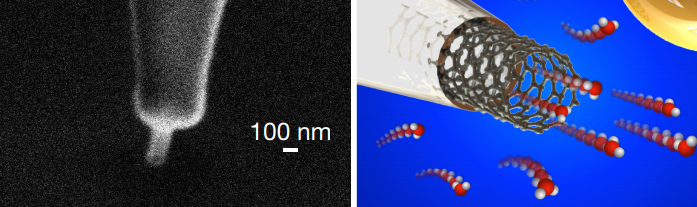
Water is made up of many many molecules of $latex H_2O$. But when you drink it from a glass or take a shower, this doesn’t matter. A typical fluid is so much bigger than an individual molecule that you can just treat it as a continuum: if you shoot water out of a hose with some initial velocity, you can use physics to figure out where the water will land without having the consider the motion of all the molecules. Considering each molecule would get the same result, but would be a vastly more difficult calculation. However, when the fluid is very small, not much larger than the size of individual molecules, then the molecular nature of water starts to matter. The “continuum breakdown” is an intriguing aspect of fluid mechanics and physics in general, but is typically very hard to study experimentally. Recently, a group of researchers based in France overcame these difficulties and managed to study water flowing through carbon nanotubes (Figure 1).

Experiment schematic
Figure 1: Left: an electron microscope image of a carbon nanotube inside a glass microcapillary. Right: a cartoon of water flowing out of the tube. Adapted from Figure 1.

When does it matter that the fluid is made of molecules? One of the implications of the molecular nature of a liquid has to do with what happens when it flows along a wall (e.g. inside a pipe). There is an assumption that the friction between the wall and the fluid will halt the flow right next to the walls, and the fluid will increase in speed farther from the walls. This is called the “no-slip” boundary condition and is a pretty central concept in fluid mechanics that makes the relevant equations much simpler (Figure 2). It is known that this condition is not perfectly true at the molecular scale. There may still be some net motion of fluid right next to the walls leading to slightly faster flow than expected from no-slip conditions because the lack of zero-velocity fluid would mean the average flow rate is higher. The exact nature of the boundary condition depends on the interaction between the molecules of the fluid and the molecules of the wall, and this doesn’t matter when the fluid is so much bigger than the region near the interface.

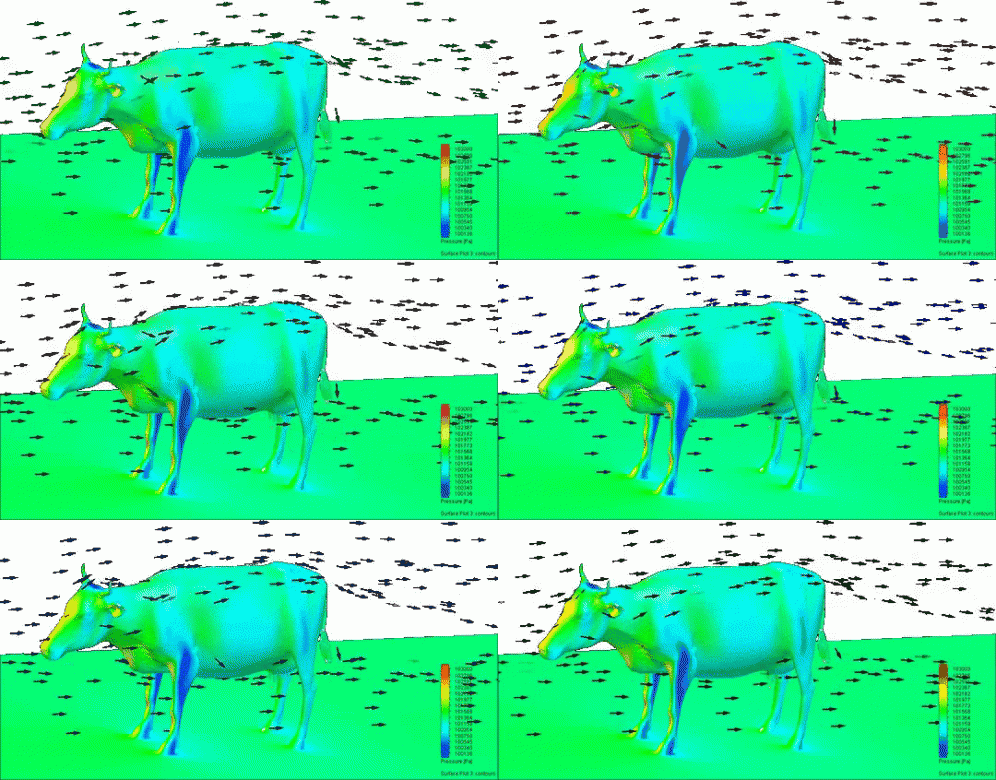
no slip cow
Figure 2: The slower wind speeds near the surface of the cow are an example of no-slip boundaries in action, where friction between the surface and the air causes the air to slow down. Yes, this was the best demonstration I could find of this.

The ideal way to investigate how molecular interactions affect flow near an interface would be to send fluid through something that is both very narrow and also very long compared to its width (narrow so that a large fraction of the molecules are near the wall, long so that the molecules spend more time in the tube and can be studied more easily). A water molecule is about 0.1 nanometers wide, so ideally the potential conduit wouldn’t be too much wider (for scale, a human hair is about 50,000 nanometers thick). Carbon nanotubes, which are one atom thick like graphene but wrapped into a cylinder instead of a sheet, are pretty close to the ideal: the skinniest is as small as a few nanometers in diameter and up to thousands of times as long. Of course, “just flow water through a carbon nanotube” is easier said than done.

The way to do this is to insert it into a slightly-bigger-but-still-small tube, which in this experiment was done with a glass capillary, which, being from the Latin word capillus meaning hair, is a tube so narrow it looks like a hair. A sharp tip was used to pull a single carbon nanotube out of a big tangled mess of carbon nanotubes called a “forest” (this is how they are arranged when you buy them). Then, the researchers carefully inserted the nanotube into the narrow end of the glass capillary, and the gap between the nanotube and the capillary was sealed. All of this was monitored in real time using a microscope (Figure 3). I recommend reading the Section 1 of the Supplemental Methods, it’s quite fascinating and not too technical. There is also a video of it here.

I met one of the authors of the paper, Derek Stein of Brown University when I visited his lab in 2015. He showed me a prototype of this experiment, and ribaldly described the process of inserting the carbon nanotube into the glass capillary as “nano-sex.” My father is a urologist and might describe this as the world’s smallest catheterization.  

SWNT insertion
Figure 3: A carbon nanotube was pulled from a “forest” and then inserted into a glass capillary tube. Adapted from Supplementary Figures 1 and 3.

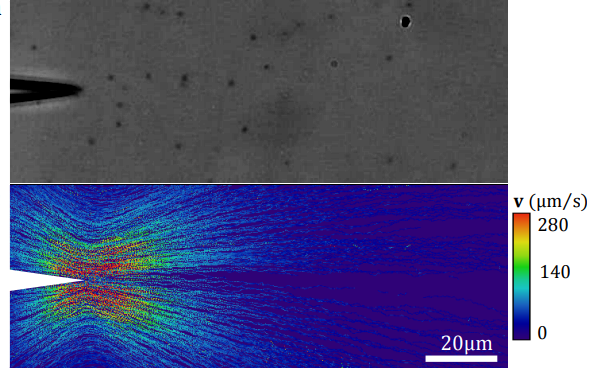
Once the tiny tube (the carbon nanotube) was hooked up to the less-tiny tube (the glass capillary), it was simply a matter of connecting two fluid reservoirs with the composite tube, applying pressure to one side, and measuring the rate at which water flows into the other side. To do this, they put fluorescent beads in the water and observed their motion near the exit of the tube. From the speed of the beads near the tube exit, they were able to figure out how fast the fluid must be flowing (Figure 4).

SWNT flow
Figure 4: Top: A microscope image of the nozzle and some beads (I have enhanced the contrast to make the beads more visible. The big black thing at the top right is probably gunk on the microscope or camera). Bottom: The speeds of the beads (no rhyme intended) at different points around the nozzle, as determined from their motion over time. Adapted from Supplementary Figure 9.

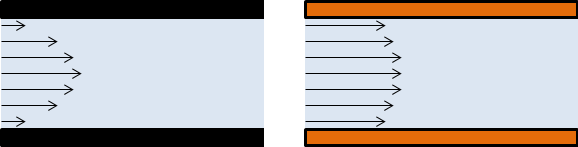
Then, by examining the relationship between applied pressure, the measured flow velocity, and the geometry of the nanotubes, the researchers were able to measure something called the fluid permeability of the system. This quantifies how well fluids can flow through the system, analogous to the electrical conductivity of a metal. Since it is known how a fluid behaves in a tube of a given radius with perfect no-slip conditions, the team compared their measurements to those expectations. What they found was that for larger nanotubes, the results were fairly consistent with no-slip, but as the tubes got smaller and a higher proportion of the water molecules come into contact with the interface, the fluid flowed a lot faster than expected (Figure 5). In the smallest tubes, it flowed 25 times faster than expected. The velocity at the walls was not actually zero, and the flow rate was consistent with a tube with twenty times larger in diameter than the one that was actually used — a big enough result to title the paper: Massive radius-dependent flow slippage in carbon nanotubes.

no slip vs. slip
Figure 5: We treat fluids as if they flow like on the left, but in carbon nanotubes, it was more like on the right.

Why does the interaction between carbon and water lead to such massive slipping? This isn’t actually known, but at the atomic scale, friction is due to electrical interactions between the atoms that make up the nanotubes and the water. Carbon nanotubes are fairly conductive, meaning the electrons aren’t that strongly bound to atomic nuclei. The authors hypothesized that an insulating tube with the same chemical structure as a carbon nanotube would have different flow properties. Fortunately, such a thing does exist: boron nitride nanotubes. They did the same type of experiment with the insulating tubes and found that the water flowed much slower than the version with the conducting carbon nanotubes. This actually surprised them— they expected a difference, but not such a big one and they had no explanation for it:

“That these nearly identical channels exhibit very different surface flow dynamics is unexpected… simulations predict that the friction of water on carbon surfaces is lower than on boron nitride surfaces, but even these predictions strongly underestimate the difference observed here.”

Traditional solid-state physics, which deals with the electronic and magnetic properties of crystalline materials, doesn’t usually intersect with soft condensed matter physics, which deals with flowy squishier things. This experiment, showing that the way a fluid flows through a tube depends on the electrical properties of the tube, is taking a step towards bringing them together, even though its results aren’t yet fully explained.

3 Easy Steps to (almost) Curing Type 2 Diabetes

Original paper: Synthetic beta cells for fusion-mediated dynamic insulin secretion


Type 2 diabetes currently affects ~ 410 million people worldwide. It is a chronic condition caused by dysfunctioning beta cells in the pancreas. Beta cells normally secrete insulin in the pancreas to regulate blood glucose levels, and the loss of beta cell function can lead to hyperglycemia (i.e. high blood sugar), a condition with complications such as blindness and heart disease. The traditional invasive treatment involving direct insulin injection is a painstaking, never-ending process as it doesn’t properly regulate the dynamics of beta cells, just treats the symptoms. Modern treatments involve cell therapy in which functioning beta cells are transplanted from a healthy person, but this therapy faces serious challenges such as finding the right donor and suppressing the immune system after the transplantation. In this post, you will read how Chen and co-workers design an artificial version of beta cells that bypass the shortcomings of conventional cell therapy.

In our body, beta cells in the pancreas are responsible for monitoring and balancing our blood sugar level. When glucose levels are low (hypoglycemia, low sugar levels), these cells rapidly secret a polymeric (see note [1]) form of glucose. With high glucose levels (hyperglycemia) a hormone called insulin is secreted to bring down the concentration of sugar in the blood. Any disturbance to these cells, either through the body attacking itself (Type I diabetes, see note [2]) or genetic risk factors, can compromise the function of the beta cells, resulting in hypo- or hyperglycemia.

A4-fig1
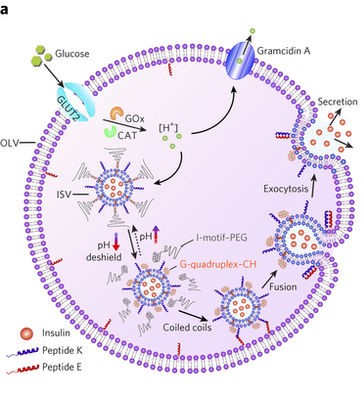
Figure 1. The schematic of the vesicle-in-vesicle system. The giant micron-sized lipid vesicle (the OLV) encapsulates the machinery components for the insulin release, including the smaller vesicles that carry the insulin (ISVs). The image is taken from Chen and colleagues.

In this study, the researchers mimic the cell’s machinery in beta cells that sense sugar and signal a response inside the cell. This artificial system features two differently sized lipid vesicles (see Figure 1). The larger vesicle is about a micron in size (millionths of a meter) and is called the outer layer vesicles (or OLVs). It acts as the body of the artificial beta cell, encompassing the necessary machinery to regulate the insulin release. The second, smaller lipid vesicles, a thousand times smaller than the OLVs, are held inside the OLVs and are thus called inner layer small vesicles, or ISVs. These ISVs encapsulate the insulin hormone inside.

The system acts like a computer code with a conditional “IF” command to decide whether it needs to respond or stay inactive. IF the glucose levels outside of the OLVs are normal or below normal, no signal is induced. However, IF the glucose level increases beyond the signal-inducing concentration (which can be easily tuned by chemical modification, see below) then the signal is triggered, resulting in insulin release. The entire system consists of machinery to perform three distinct steps.

The first step is the glucose sensing step. Using a glucose transporter membrane protein, the OLVs sense and absorb the glucose from their surroundings. Next, the uptaken glucose is converted into protons using two enzymes that are inside OLVs (see note [3]). Changing the concentration of protons in a liquid alters its pH. This variation in the pH of the microenvironment inside the OLVs initiates the second process.

The second step is the response. For this step to proceed, the ISVs need to get close to the inner wall of the OLVs. The surface of the ISVs, however, is decorated with giant linear molecules that prevent the ISVs from getting close to the OLVs’ inner wall. But, with a high glucose concentration, the environment inside the OLVs becomes acidic, as described above. Under acidic conditions, the ISVs’ protective coating is engineered to leave the surface of ISVs, and this step is called the de-shielding step. Now ISVs close to the inner wall of the OLVs can merge or “fuse” with the OLVs. However, the two vesicles will still not reliably fuse together, so the researchers implement an active fusion mechanism (see below).

The third step is the release of the insulin. Remember that the nanosized vesicles are already loaded with insulin. The authors use two complementary DNA strands: one on the surface of ISVs (pink strands in Figure 1) and the other one on the inner wall of the OLVs (red strands in Figure 1). These complementary strands are like a key and lock that only open when the right key is inserted in the right lock. When the environment is acidic, the ISVs are free (de-shielded happens) to reach to the inner wall of the OLVs and through the DNA strands, ISVs bind to the wall. When this binding happens, the fusing event follows. Upon the fusion of ISVs to OLVs, the insulin is released.

When the surrounding glucose levels decrease, fewer protons are created inside the OLVs, and a second membrane protein called Gramicidin A, which is constantly working to expel protons from the OLVs, can balance the pH inside the OLVs. When the pH becomes neutral, the giant linear protective molecules that were floating around when media was acidic find the ISVs and re-stick to them. Thus the cascade of events of glucose sensing, deshielding, and insulin release then ceases once the pH returns to the point that the deshielding doesn’t happen.

fig2
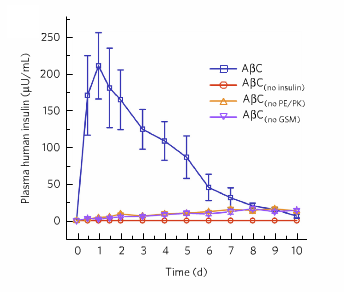
Figure 2. The insulin release as a function of time in diabetic mice treated with artificial beta cells and the control groups. The figure is adapted from Chen and colleagues.

To test how their system actually responds in a biological medium, the authors apply a gel under the skin of mice that contains the OLVs. For a group of diabetic mice, this artificial beta cell system showed a significant effect on the measured insulin levels in the mice blood. For control groups; (i) with no insulin ($latex A \beta C_{no insulin}$), (ii) with no lipid fusion system $latex A \beta C_{PK/PE}$ (PK and PE are DNA molecules that mediate the fusion process), and (iii) with no glucose sensing machinery $latex A \beta C_{no GSM}$, the insulin release was minor over the course of 10 days (see Figure 2). But when the insulin-loaded artificial cells were administered, the mice’s insulin levels increased remarkably over the control cases.

All in all, Chen and colleagues manage to release insulin in a controlled manner. There’s no need to evade an organism’s immune system–the OLVs don’t provoke an immune response. There’s also no need to inject insulin–it’s released automatically when needed. This work gives hope of drastically improving the lives of the nearly half a billion people worldwide suffering from diabetes.


[1] You might be asking: why do pancreatic cells secrete a polymeric form of sugar in response to low blood sugar level?! Well, which one is faster and more effective to you? Releasing one-by-one a single sugar, or releasing one-by-one a bag full of sugar molecules (the polymeric form). When this polymer leaves the cell quickly, it bursts (dissociates) into single sugar molecules, later to be absorbed by relevant cells.

[2] Under some circumstances that might be due to genetics, the body’s immune system attacks the beta cells and destroys them. These are called autoimmune disorders.

[3] Glucose oxidase (GOx) and catalase (CAT) are working in parallel to transform the glucose signal into protons. GOx, with the help of an oxygen molecule, converts the glucose to gluconic acid releasing a proton. But there is a by-product of this reaction which is not favored. The hydrogen peroxide ($latex H_{2}O_{2}$) produced is very active that can mess up all the molecules inside the giant vesicles. With a nice trick, the researchers simultaneously convert the hydrogen peroxide to oxygen by adding CAT enzyme. Now, this is feeding two birds with one seed. Getting rid of ($latex H_{2}O_{2}$) while providing the oxygen for the GOx to do its job.


The matter of maternal mucus: permeability and preterm birth

Original paper: Probing the potential of mucus permeability to signify preterm birth risk


What is the first thing that comes to mind when you hear the word mucus? For most people, it’s probably the last time they had a cold. Mucus is not usually something we think about unless there’s a problem. However, it is always there, working behind the scenes to make sure that our bodies function smoothly. Mucus lines the digestive, respiratory, and reproductive systems, covering a surface area of about 400 square meters- about 200 times more area than is covered by skin. In addition to providing lubrication and keeping the underlying tissue hydrated, mucus also plays a key role the human immune system. It serves as a selectively permeable membrane that protects against unwanted pathogens while also helping to support and control the body’s microbiome [1].

Mucus is an example of a hydrogel, which is a three-dimensional polymer network that is able to hold a large amount of water. While hydrogels get their structural integrity from this polymer network, the polymer makes up only a small fraction of the material once they are swollen with water [2]. In mucus, this network is made of biopolymer called mucin.

Researchers in the Ribbeck lab at MIT think that mucus is an underappreciated–and understudied–part of the human body. They have developed techniques for characterizing the mucus hydrogel to better understand how it is able to function as a selective filter. In today’s paper, Kathryn Smith-Dupont and coworkers in the Ribbeck lab investigate cervical mucus and try to understand the relationship between mucus permeability, or its ability to be a selective filter, and the risk of preterm birth.

A birth that occurs before 37 weeks of gestation is considered a preterm birth. This can be associated with negative health outcomes for the baby both in infancy and later in life. Preterm birth is the leading cause of death for children 5 years of age and under, and those who survive can face challenges such as learning disabilities and hearing problems [3]. While the causes of preterm birth can be complex and varied, infection in the fluid surrounding the fetus–which is known to trigger preterm birth–is seen in 25-40% of cases. The infecting bacteria are often the same species that are found in the vagina, suggesting that it traveled through the cervical mucus barrier to infect the sterile uterus.

Smith-Dupont and coworkers look for correlations between mucus permeability and preterm birth risk by comparing the cervical mucus in ovulating non-pregnant women with that in pregnant women. Once the pregnant women give birth, their mucus is characterized as low-risk or high-risk depending on whether they had a preterm birth. The cervical mucus in ovulating non-pregnant women is expected to be at its most permeable to facilitate the passage of sperm, whereas in pregnant women the mucus should be less permeable. Whether a microbe makes it through the mucus barrier can be affected by its size, biochemical interaction with the mucin, or a combination of the two.

First, the researchers look at the permeability of the mucus to 1-micrometer spheres. This is comparable in size to both the mucus mesh and bacteria, and is used to see if the structure of the mucin network is hindering transport through the mucus. Next, they look at the permeability of the mucus to nanometer-size peptides (small bio-molecules). These are much smaller than the mucus mesh, so their ability to pass through the mucus is determined by biochemical interactions with the mucus instead of by its structure. By using these two probe sizes, the researchers hope to identify which mechanism is responsible for any differences in the mucus permeability.

msd_2plots_anno2
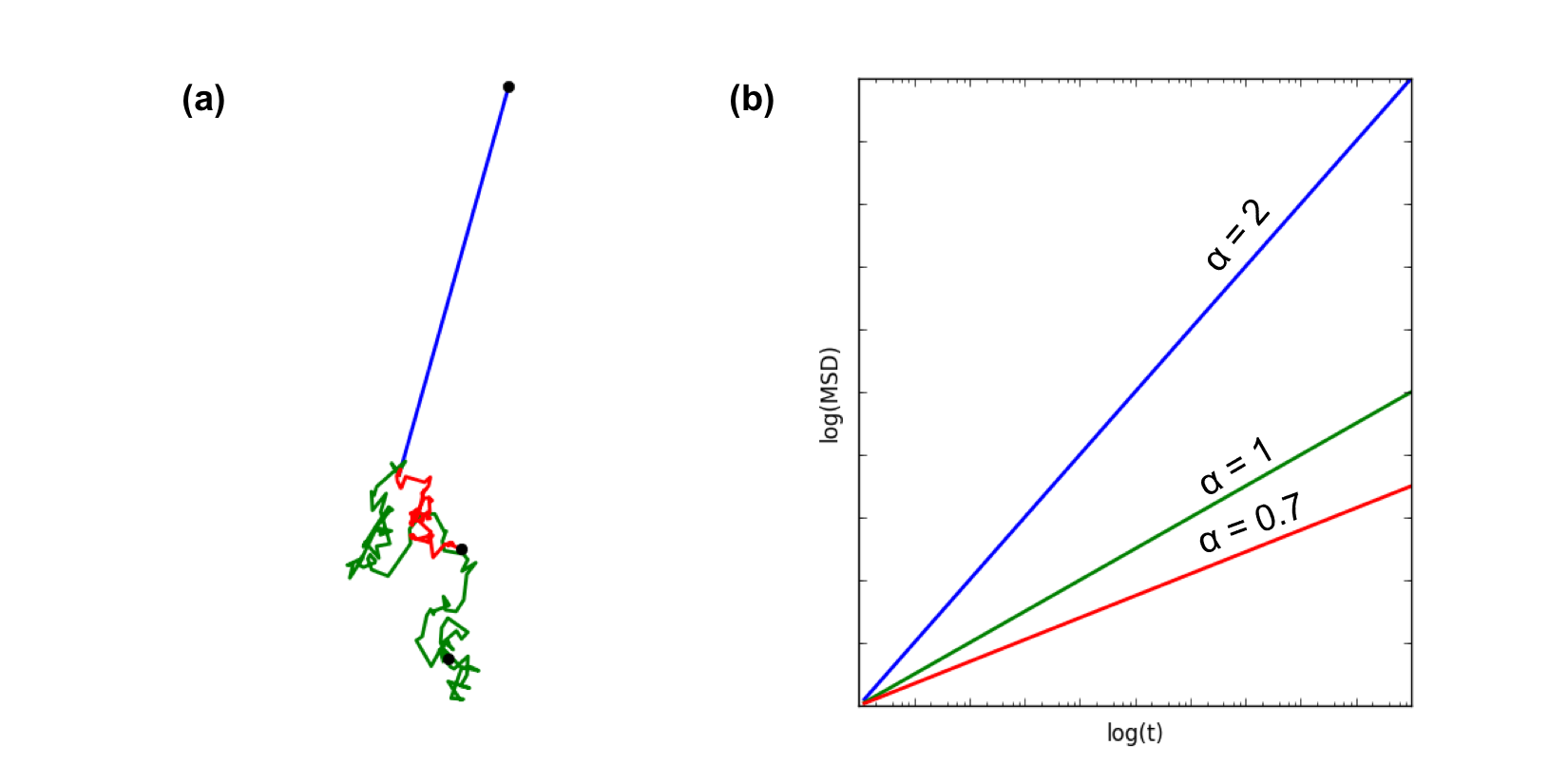
Figure 1: (a) Examples of trajectories of particles with ballistic (blue), diffusive (green), and subdiffusive (red) behavior. (b) The MSD for each trajectory on a log-log plot. An MSD with a slope of 2 or 1 indicates ballistic and diffusive behavior, respectively. An MSD with a slope smaller than 1 indicates subdiffusive motion.

To quantify the motion of 1 micrometer spheres in the mucus, the researchers track the motion of spheres in each mucus sample and calculate their mean square displacement (MSD). A particle’s mean square displacement describes how far it moves, on average, from its starting point in a given amount of time. The MSD is characterized by

$latex \langle r \left( t \right) ^2\rangle = 4 D_{\alpha} t^{\alpha}$

where $latex \langle r^2 \left( t \right) \rangle$ is how far the particle is from its starting point after t seconds and $latex D_{\alpha}$ describes how quickly the particle moves (called the diffusion coefficient). If a particle is acted on by a constant force, it moves in a straight line known as ballistic motion and $latex \alpha = 2$. This is not how a micrometer-scale particle in a fluid moves because it is being bounced around by random forces from the molecules in the fluid. Instead of moving in a straight line, the particle’s trajectory is a series of small excursions in random directions, and it takes longer to get away from its starting point than if it just moved in a straight line. This type of motion is known as free diffusion, and its MSD is characterized by $latex \alpha = 1$. In mucus, the polymer network gets in the way of the particle’s diffusion, so it can’t diffuse freely. This motion is called subdiffusive, and it has $latex \alpha < 1$. The more the particle’s diffusion is hindered by the polymer network, the lower its value of $latex \alpha$ will be. An example of a trajectory and MSD plot for each type of motion is shown in Figure 1.

mucus_subdiffusion
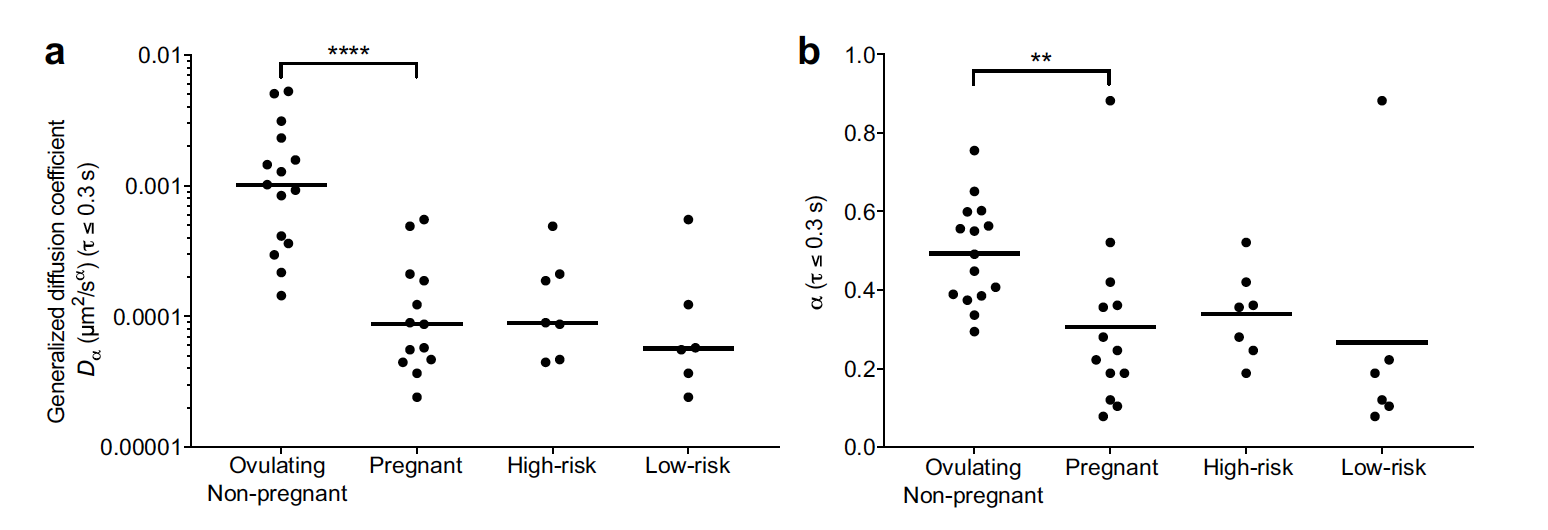
Figure 2: The diffusion coefficient $latex D_{\alpha}$ (a) and the diffusion exponent $latex \alpha$ (b) from the single particle tracking of 1 micrometer spheres in mucus samples. (Adapted from Smith-Dupont et al., 2017)

To compare the permeability of the mucus samples, the researchers measure $latex \alpha$ and $latex D_{\alpha}$ for each sample, as shown in Figure 2. The mucus from the pregnant women resulted in lower values of $latex \alpha$ and $latex D_{\alpha}$ than in the non-pregnant women, indicating that the network is more restrictive, as expected. However, the small difference between the high-risk and low-risk pregnancy women was not statistically significant [4]. This suggests that the difference in mucus permeability between high-risk and low-risk pregnancies is not primarily caused by differences in the mucus mesh size.

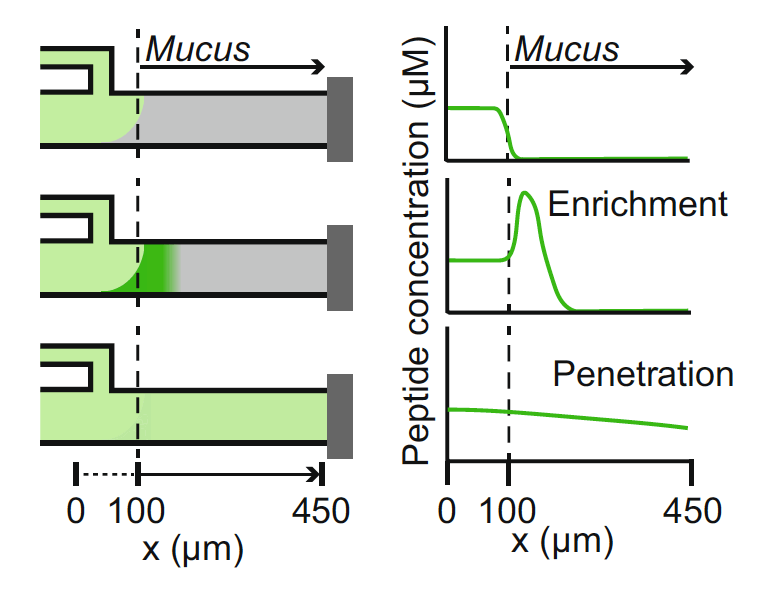
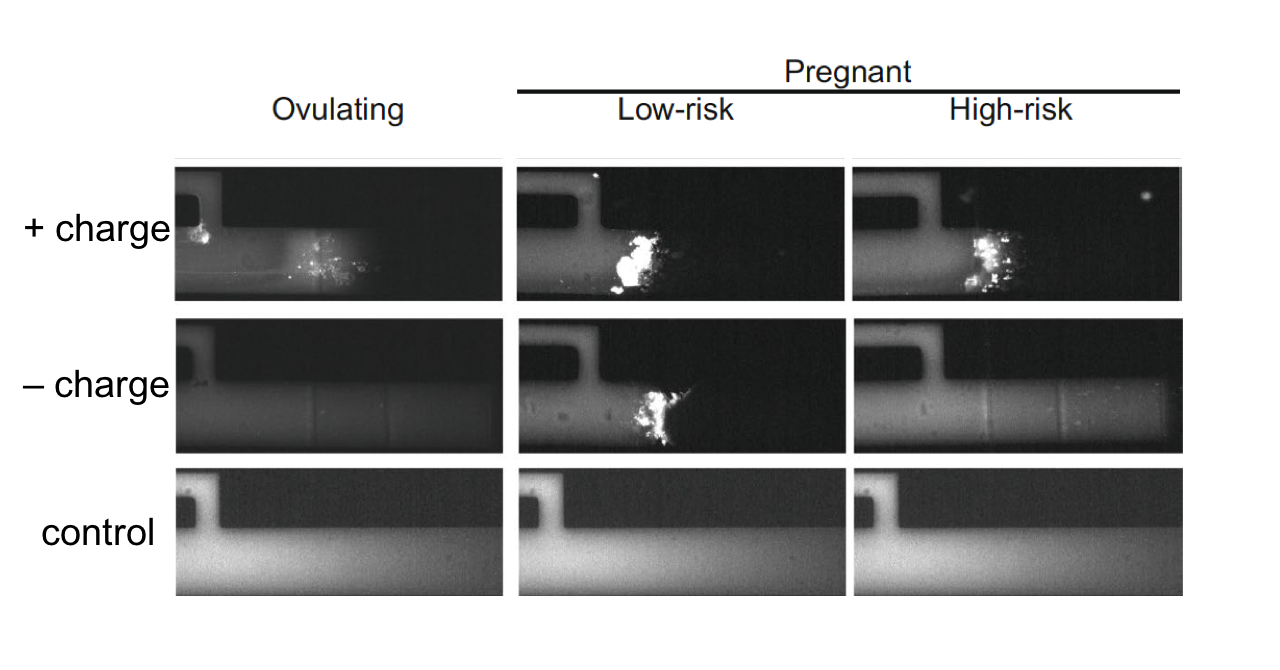
Next, the researchers look at the permeability of the mucus to small, fluorescently labeled peptides. They use a microfluidic device (to learn more about microfluidics, see [5]) to flow a solution of the peptides through the mucus, and observe whether the peptides get trapped or are able to flow through by looking at the fluorescent profile. Figure 3 shows a schematic of the microfluidic device. The ability of a small particle to travel through mucus is controlled by what happens when it comes in contact with part of the network. This interaction is thought to be affected by the charge of the particle, so the researchers investigate the behavior of both positively and negatively charged peptides.

mucus_microfluidic
Figure 3: A schematic of the microfluidic device used to determine the permeability of mucus samples to fluorescently labeled peptides. If the mucus is not permeable to the peptides they get stuck in the mucus, causing enrichment (or buildup) of peptides at the front of the mucus sample. If the mucus is permeable, the peptides penetrate the mucus and are seen throughout the sample. (Adapted from Smith-Dupont et al., 2017)

For both positively and negatively charged peptides, the researchers see a significant difference between low-risk and high-risk mucus, as shown in Figure 4. The mucus from both low-risk and high-risk patients was less permeable to the positively charged peptides than the mucus from the ovulating patients. However, more of the positively charged peptides were able to penetrate into the high-risk mucus than the low-risk mucus. The results for the negatively charged peptide were more dramatic. While the low-risk mucus was not permeable to the negatively charged peptide, the high-risk mucus was as permeable as that from the ovulating patients. This suggests that the biochemical properties of the cervical mucus in low-risk and high-risk patients are primarily responsible for differences in permeability.

mucus_peptides
Figure 4: Fluorescence profiles after 900 seconds for positively and negatively charged peptides through mucus samples. A control shows the profile in fluid with no mucin. (Adapted from Smith-Dupont et al., 2017)

The results in this study help to clarify which properties of cervical mucus cause an increased risk of preterm birth. The researchers considered both structural and biochemical origins for the increased permeability of cervical mucus to harmful pathogens. Structural changes in the mucin network do not appear to be the primary difference between cervical mucus in low-risk and high-risk pregnancies. Instead, biochemical changes in the mucus that affect how the mucus interacts with microbes appear to be the primary cause of its increased permeability in high-risk pregnancies. This understanding could be useful for developing diagnostic tools to determine a woman’s preterm birth risk and, ideally, treatment to reduce her risk.


[1] https://en.wikipedia.org/wiki/Mucous_membrane#cite_note-Sompayrac-3

[2] Ahmed, Enas M. (2015). Hydrogel: Preparation, characterization, and applications: A review. Journal of Advanced Research, 6(2), 105-121.

[3] http://www.who.int/mediacentre/factsheets/fs363/en/

[4] While the difference between high-risk and low-risk pregnant women is not significantly significant, this does not rule out a difference between the two. The sample size is relatively small for this study, with only 14 pregnant women (7 low-risk and 7 high-risk) included, so the lack of statistical significance could also be due to insufficient data.

[5] https://www.nature.com/articles/nature05058.pdf?origin=ppub

How the leopard got its spots

Original paper: Alan Turing, The Chemical Basis of Morphogenesis, Philosophical Transactions of the Royal Society B (1952)

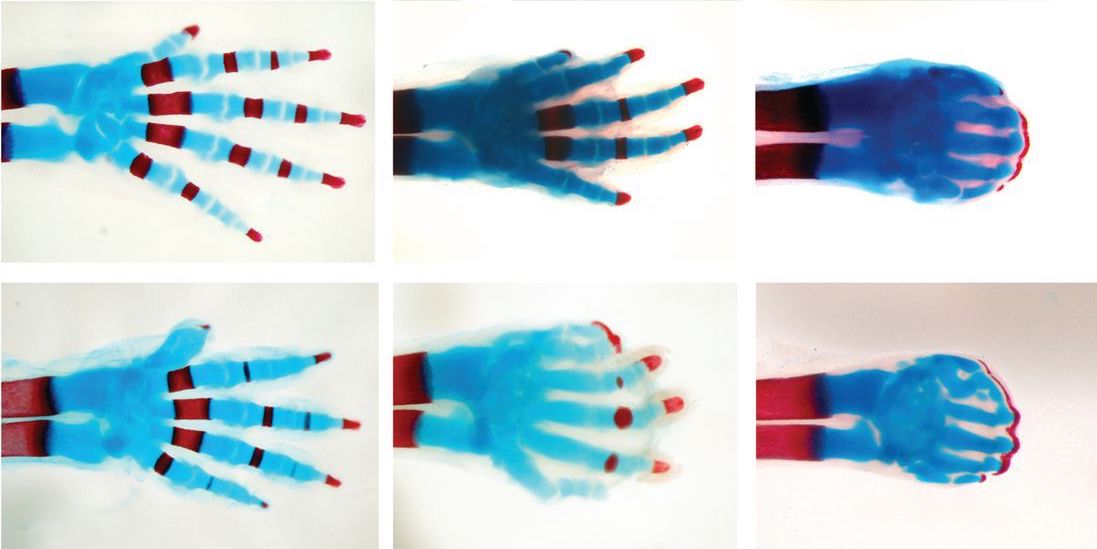
The human brain has evolved an arguably overactive habit of finding patterns. Who hasn’t spent an afternoon morphing clouds into various shapes? Similarly, groups of stars are transformed into bears, ladles, and warriors by ancient mystics and modern stargazers alike. Pattern recognition becomes more obviously useful looking at living things, where recognizing the difference between a harmless garter snake and a deadly asp is a skill worth having. We identify zebras by their stripes and leopards by their spots. But biology doesn’t just use external patterns. Organisms use internal, self-generated patterns to guide body formation. During the formation of a mouse’s paw, what will eventually become fingers are blueprinted by the certain proteins. Having the correct amount of each protein is critical to the correct number of the shape of fingers that are created  (Figure 1).

digitFormation
Figure 1: The formation of fingers in the foot of a mouse requires a careful patterning of different proteins found during mouse development. If the amount of these proteins is changed, so does the number of eventual fingers. From Sheth et al. Science (2012)

In the mouse, these patterns are formed partly by genetic expression and partly by physical interactions between proteins. In today’s paper, we look at one of the first explanations of these physical interactions, given by the great mathematician Alan Turing. In his classic 1952 paper, The chemical basis of morphogenesis, Turing provides a simple explanation for how chemicals, like proteins, can interact with each other under known laws of physics to create striking patterns from a blank, uniform canvas.

Turing creates a pair of equations describing the rate of change of two different chemical species, X and Y, that he calls morphogens. The type of equations that Turing established is called reaction-diffusion equations. To understand Turing’s conclusions, I’ll first describe what is meant by reaction and diffusion and then put these concepts together to give a physical picture of how they can produce stripes. (See the appendix for a more detailed, mathematical description of the same phenomenon).

The reaction part of a reaction-diffusion equation describes the interactions between X and Y. A generic pair of coupled reaction equations will look like:

$latex (\partial X / \partial t)_{reaction} = \alpha X + \beta Y$

$latex (\partial Y / \partial t)_{reaction} = \gamma X + \delta Y$

Let’s look at just the first equation. On the left-hand side is the time derivative of the concentration of X, which measures how X changes in time depending on what is on the right-hand side. On the right-hand side, we see that the change in X over time is dependent on both itself and Y, multiplied by constant coefficients, alpha (?) and beta (?).

? tells us how strongly X affects itself, while ? tell us how strongly Y affects X. If ? is positive, we call Y an activator of X. If ? is negative, we call Y an inhibitor of X (similarly the sign of ? tells us whether X activates or inhibits itself, and the variables gamma (?) and delta (?) describe the behavior of how X and Y affect Y). We then can play around with different combinations of signs for all these coefficients to see how the system evolves in time.

The diffusion part of the reaction-diffusion equations describes how morphogens will move, on average, when they aren’t evenly distributed in space. The morphogens will move from areas of high concentration to areas of low concentration until everything is even, the same way a puff of perfume spreads across a room. The main difference between two morphogens is how quickly they move from high concentration to low concentration, which is quantified by a diffusion constant, D. If D is large, morphogens move rapidly, and if D is small, morphogens move slowly.

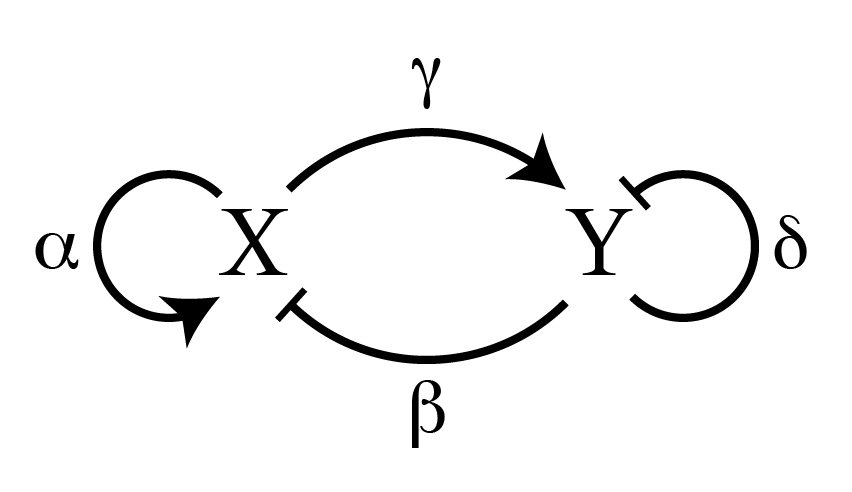
Turing found that a stable pattern can arise if we have a fast inhibitor and a slow activator. To be concrete, let’s call X the slow activator and Y the fast inhibitor[1]. This means that DX<DY, and ?,?>0 and ?,?<0 in the reaction equations shown above. Therefore more X creates more of both X and Y, and more Y destroys more of both X and Y (Figure 2).

reactionDiagram-01
Figure 2: Reaction network for X and Y in the activator-inhibitor model. The sign of the coefficients that couple the ?X/?t or ?Y/?t to X or Y determine what kind of arrow is used in the diagram. A positive coupling (activation) is shown with a pointed end (?), while a negative coupling (inhibition) is shown with a flat end (?).

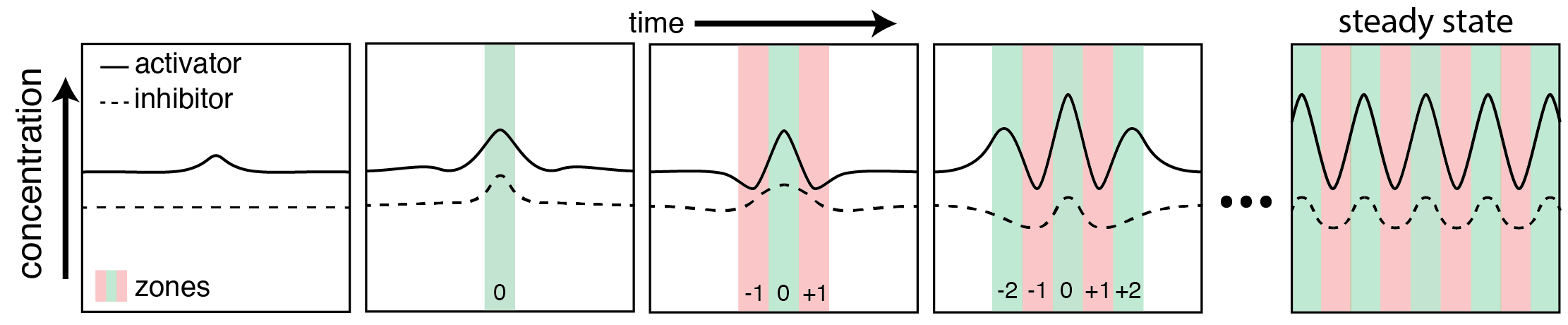
Let’s start with a 1 dimensional, uniform distribution of both X and Y everywhere. Wherever Y exists, both X and Y get destroyed, and wherever X exists, both X and Y get created. If the distribution of X and Y are exactly equal, and they create and destroy at the same rates, then nothing will change. In reality, there will be very small variations over space of both X and Y[2]. These small variations will lead to slightly more X or Y in particular spots (Figure 3).

Where more X exists, there will be an overall creation of both X and Y. Since X moves around more slowly, it will stay in the same spot for longer, while Y will quickly move away. The lingering X will produce even more X and Y, creating a region of excess X.  Y has then moved to neighboring areas and represses the production of both X and Y. However, eventually the concentration of Y decreases enough for the production properties of X to dominate again, and the whole system repeats itself. Thus, a static wave pattern is created from an initially (almost) uniform distribution (Figure 3).

Schematic of how a stripe pattern forms in a reaction-diffusion system
Figure 3: Schematic of pattern formation using reaction diffusion equations. First, a small shift away from zone 0 in the activator (X) occurs. This then leads to an increased amount of both the activator (X) and the inhibitor (Y) in zone 0. The inhibitor diffuses outwards faster than the activator. This diminishes the activator in zones ±1. Within zones ±1, the inhibitor also inhibits itself, leading to new regions, zones ±2, with an excess of activator again. Eventually, the system reaches a steady state: a wave pattern that no longer changes in time.

That gets at the gist of Turing’s argument. It truly is an amazing discovery because diffusion plays such an important role. Usually, diffusion is considered a process that “smooths” things. As stated above, it tends to move things from regions of high concentration to low concentration, until the same concentration is left everywhere. Here, it’s doing the exact opposite. Diffusion is helping create pockets of very high concentrations of morphogens. Turing’s genius was to recognize that diffusion could do this at all. It’s not only an equalizer, it can create order from chaos.

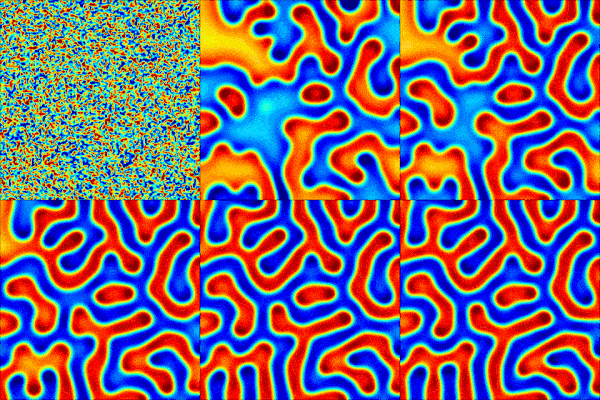
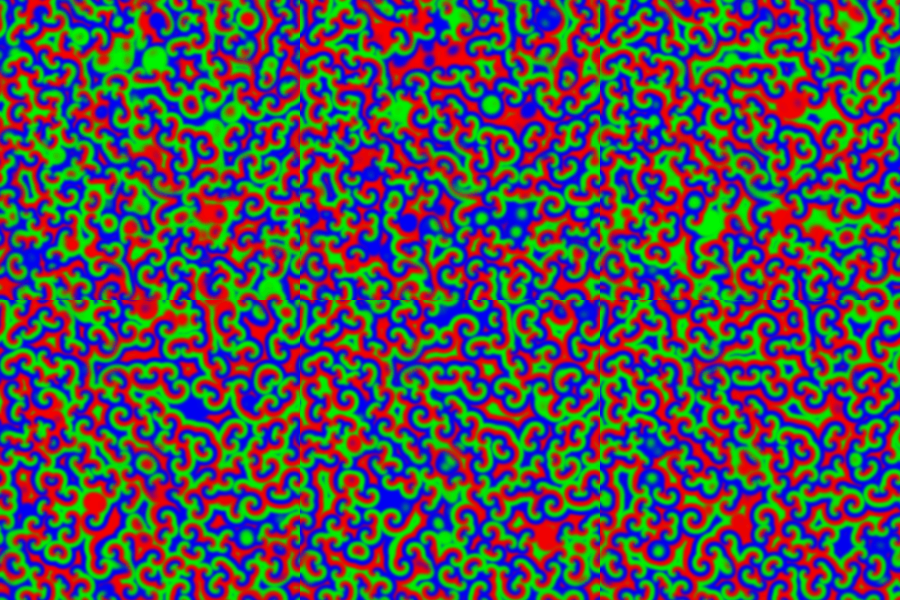
The wave described above is an example of what can happen in one dimension. The pattern evolves until a wave is set up, and then stops changing. With slight tweaks in the parameters put in the equations, more interesting patterns — ones that never stop changing in time — are also possible. Even more striking is the role that the size and shape of the area you consider has on the resulting patterns. Depending on the starting parameters, a number of different patterns can emerge, such as labyrinths, stripes, and spots (Figure 4).


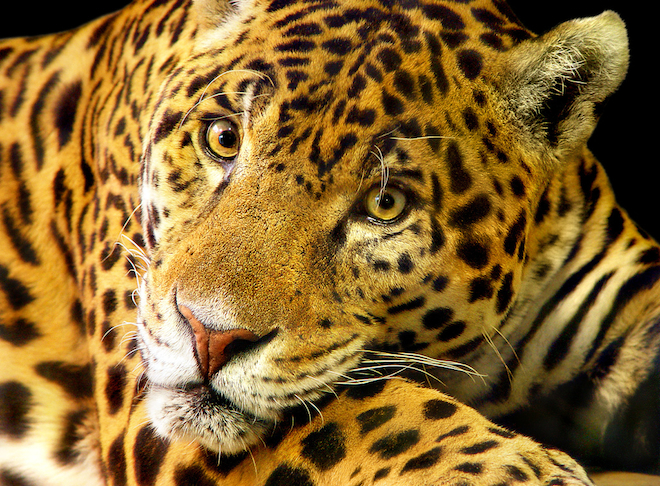
Today, Turing’s model serves as the foundation for more realistic models of pattern formation. There hasn’t been much evidence for the exact activator-inhibitor mechanism that Turing has suggested, but by adding more than two chemicals or adjusting the parameters that Turing put forth, reaction-diffusion models have been used to help explain everything from the patterns on cat fur to the number of fingers on mouse paws.  Turing’s model shows that mathematical analysis is a valid way to explain some of the most striking and complex biological phenomena seen in nature.


[1] We can make this arbitrary choice because, for right now, X and Y are just labels. As long as one is a fast inhibitor and one is a slow activator, we get to describe them with whatever label we want.

[2] The reason for this is statistics. Think of flipping 500 coins. You know that you should expect 250 heads and 250 tails, but the probability of getting exactly that outcome is incredibly small (more likely you’ll be close, 248 heads and 252 tails, or 240 heads and 260 tails). For this reason, we may expect the concentrations of X and Y to both be exactly equal, but in reality, there will be some small difference between the two.


Appendix

A more mathematical explanation of Turing patterns can be found here

Maxwell-Boltzmann in the Mosh Pit

Original paper: Collective Motion of Humans in Mosh and Circle Pits at Heavy Metal Concerts


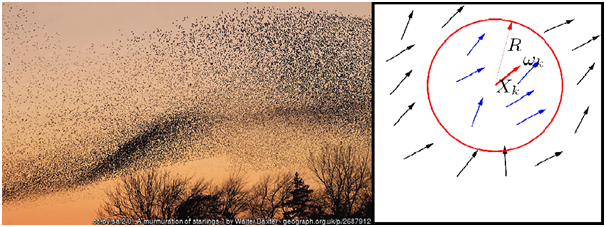
You must have observed a flock of birds or a school of fish form wonderful patterns. The entire group behaves like one big organism. Have you ever wondered if humans behave similarly when many of them get together? Are there similarities between violent mobs or cheering crowds and a herd of sheep or a flock of birds? Today’s paper studies human behaviour in one such form of gathering – A mosh pit!

Before jumping into a mosh pit, it is worthwhile to discuss how systems made up of a collection of moving objects form complex patterns. One type of system where complex patterns arise occurs when each moving unit in the system interacts with its neighbours while maintaining the same absolute velocity. Systems of this sort are very common in biology, from schools of fish to flocks of starlings and swarms of locusts. In all these examples, each moving unit rarely communicates with the entire group to coordinate their motion. However, each individual in these groups is trying to move in the general direction of their nearest neighbours, and with the same speed as them. Tiny errors may occur while trying to follow the neighbourhood. Under the right circumstances, these tiny errors can give rise to complex patterns. This phenomenon, where patterns emerge because self-propelling particles try to align with their neighbours, can be modelled by a set of very simple equations introduced by Tamas Vicsek in 1995. This is one of the simplest models physicists use to study how patterns emerge in flocks.

1
Figure 1: Left: Starlings in flight form patterns. Flocking of birds is an example of collective motion where patterns emerge because each bird in the flock tries to follow in the general direction of their neighbours. Right: A bird labeled $latex k$ with position $latex X_k$ and velocity $latex w_k$ tries to align with the mean velocity of its neighbours within the disk of radius $latex R$

Human beings are capable of intelligent decision making on their own. Yet a crowd’s behaviour may not have any trace of the intelligence of an individual. Spontaneous formation of lanes of pedestrians, jamming during a panic-induced motion of a crowd and Mexican waves (also known as ‘the wave’ in the US) of cheering fans during a football match are all collective behaviours in response to stimuli from the surroundings. It is worth asking if the equations that describe the motion of flocks of birds can be applied to a collection of humans with reasonable accuracy.

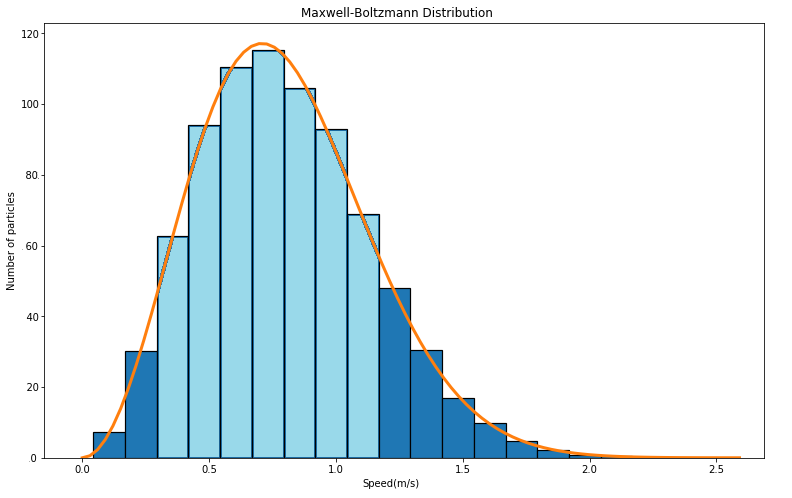
In today’s paper, Silverberg and his colleagues study the dynamics of the crowd in heavy metal concerts. They study YouTube videos to calculate the speed distribution in mosh pits. While they refer to previous studies of crowd dynamics, they start this paper with a few surprising observations. Even though the density of people in a mosh pit is much higher than gaseous systems, their behaviour resembles gaseous particles. They report that the speed distribution in mosh pits fits well with the 2D Maxwell-Boltzmann distribution.

mbdist
Figure 2: An example of the Maxwell-Boltzmann distribution of speed of particles in a gas.

The Maxwell-Boltzmann distribution is used to describe the probability that a particle in a volume of gas moves with a certain speed. Such a distribution occurs when a volume of gas is in thermal equilibrium, meaning that the gas has the same temperature as its surroundings and its temperature does not change with time. The shape of that distribution suggests that there is a range of speeds, in the middle of the distribution, that includes the majority of the particles (denoted by the light blue bars in Figure 2). A much smaller fraction of particles is likely to move very fast or slow. Similarly, a small fraction of the participants in a mosh pit moves very fast, while the majority moves at a much slower pace.

A mosh pit resembles gaseous systems in equilibrium although it has all the characteristics of a non-equilibrium system –  it continuously changes with time as participants join or leave the pit, it changes shape on the suggestion of the performers on stage. Although it may be expected that each participant in a mosh pit moves with similar velocity as their neighbour, the authors show that there is no such dependence beyond one shoulder length. Thus it is not necessary that your neighbours have the same velocity as you, in a mosh pit. The authors go on to ask and answer the question: “why does an inherently non-equilibrium system exhibit equilibrium characteristics?”
3
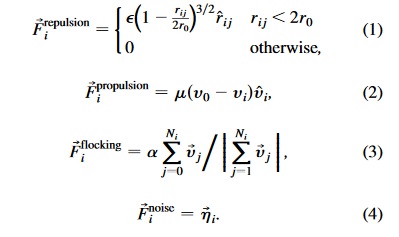
Figure 3: The forces that can be used to describe the motion of crowds in a mosh pit. The repulsion force occurs due to collision and does not exist beyond two human shoulder length. The propulsion force describes the individual velocity and the force needed to move against or with the crowd. The flocking force describes the tendency to follow in the average direction and speed of the crowd. Noise term is used to quantify any other random behaviour.

They simplify the complex dynamics exhibited in a mosh pit by breaking it down to a few phenomena that can be observed intuitively. They observe that a mix of forces that describe repulsion due to collision, self-propulsion, flocking interaction and some random noise, can model the crowd.

Using these equations and suitable parameters, they simulate the dynamics of the crowd (Figure 4). It is interesting to note that the equations lead to three major phenomena that may dominate at various time scales. They are flocking, noise and collision. Noise and collision tend to disrupt any patterns, whereas the tendency to form flocks and follow the neighbours creates patterns. If it takes a long time to form flocks, the disruption from collisions and noise gives rise to random motion. Random motion has the nice property of making its velocity distribution look like a bell curve, which gives rise to the Maxwell-Boltzmann distribution[1].


circlepit
Figure 4: This is an example of a simulation of the crowd using the equations in figure 3. Red dots represent active participants who move around and thus experience flocking interactions. Black dots represent participants who prefer to remain stationary and are not subject to flocking interactions or random forces. This simulation can be accessed at: http://mattbierbaum.github.io/moshpits.js/


Therefore, a majority of random movers have a speed around the most probable one, whereas a tiny fraction moves fast or slow. This is similar to gases in equilibrium and answers the question why mosh pits that seem to be out of equilibrium behave like particles in an undisturbed gas. If, however, people form flocks faster than they collide with each other they tend to separate themselves out from non-participants. In this case, the flocking dominates for the active participants leading to a different distribution. The active participants are confined but they can move with a large angular momentum.

While studying human behaviour is a fun exercise, the authors conclude that such studies may help design better crowd management strategies and architectural safety protocols. Heavy metal concerts put a large number of humans in extreme conditions thus creating an opportunity to study how humans behave as a group.

[1] Vicsek, T. & Zafeiris, A. Collective motion. Phys. Rep. 517, 71–140 (2012).

[2] Simulation can be found at: http://mattbierbaum.github.io/moshpits.js/


1. The Gaussian distribution, or bell curve, describes the velocity of particles in a gas. The Maxwell-Boltzmann distribution for the speed (= absolute value of the velocity vector) can be derived from the Gaussian distribution of the velocities. (Link to: Distribution for the velocity vector)

Scientists dream of micro-submarines

Original paper: Graphene-based bimporphs for micron-sized, autonomous origami machines


In the 1966 movie Fantastic Voyage, a submarine and its crew shrink to the size of a microbe in order to travel into the body of an escaped Soviet scientist and remove a blood clot in his brain. The film gave viewers a glimpse into a possible future where doctors could treat patients by going directly to the source of the problem instead of being limited by the inaccessibility of most parts of the human body. This dream of a tiny submarine that can be piloted through the human body to deliver medical care remains, even 50 years later, in the realm of science fiction. However, Miskin and coworkers at Cornell University have brought us one step closer to making this a reality with their recent development of autonomous microscale machines.

To live up to its name, an autonomous machine must have two features. First, it should be able to detect a stimulus from its environment. Then, without any help or intervention, it must respond to the stimulus with a desired response. In this scenario, the machine is not thinking or making decisions— instead, its response to the stimulus is pre-programmed. The ability to respond without supervision means that it can function in remote, inaccessible places, such as deep inside the human body.

One of the biggest challenges to miniaturizing machines is that they contain moving parts. Even fairly simple mechanisms like hinges and valves are too difficult to make on such a small scale. They would require sub-micron machining precision that is not possible using techniques available today. As a result, scientists and engineers must develop alternative mechanisms to perform the functions of these moving parts.

To address this problem, McEuen and Cohen develop a bimorph actuator— a mechanism that allows the machine to move in response to a stimulus, but does not have any complicated moving parts to fabricate [1]. Instead, the bimorph actuator is just a very thin sheet with two layers, one of graphene and the other of glass, that bends in response to changes in temperature or electrolyte concentration. The glass layer expands or contracts when exposed to the different environmental conditions [2], but the graphene does not.  The expansion or contraction of only one of the layers causes the whole sheet to bend (as shown in Movie S2) [3]. Although glass seems like a material that would break instead of bending, the actuator is only two nanometers thick so it bends easily.

nanosubmarines_fig1
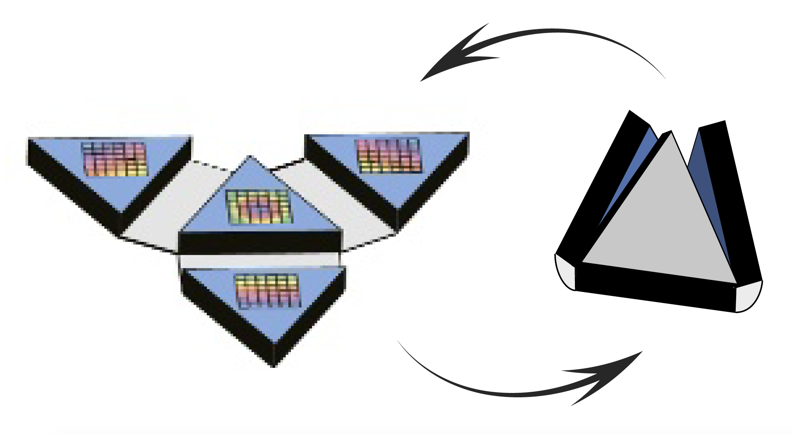
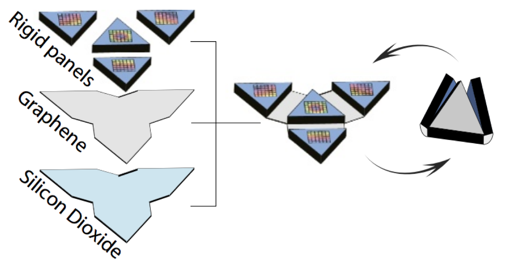
Figure 1: The rigid panels on the bimorph sheet direct it to fold into the desired shape. (Adapted from Miskin et al., PNAS 2017)

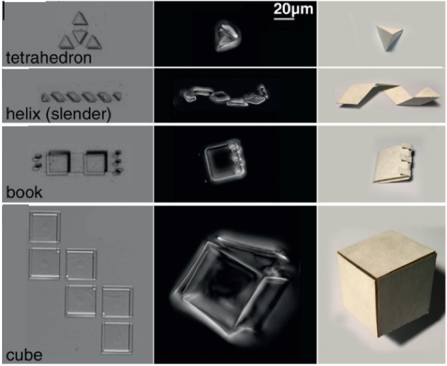
To harness the motion generated by their bimorph actuator, the researchers take inspiration from an old technique: origami. Since the 17th century, origami has been used in Japan to transform flat sheets of paper into three-dimensional sculptures using only a series of folds. With paper origami, the person making the folds knows where they need to go to make the right final sculpture. However, for a micro-machine, these folding instructions must be programmed into the flat sheet during fabrication so it can fold itself. To do this, the researchers attach thick, rigid panels to certain areas of the bimorph sheet, as shown in Figure 1. The sheet is then only able to fold in the areas between the panels, so the folds are constrained by the shapes and locations of the panels. Using this technique, the researchers construct a variety of structures including a helix, a tetrahedron, a cube, and even a book with clasps, as shown in Figure 2.

nanosubmarines_fig2
Figure 2: Using bimorph actuators, the researchers make complex three-dimensional figures. On the left, the unfolded structure. Center, the folded structures, all shown with the same scale. Right, the same structure folded from paper. (Adapted from Miskin et al., PNAS 2017)

While a self-folding cube is still a long way from a submarine, this technology does open the door to the development of small machines that function on the cellular level. All of the materials used in the origami micro-machines are biocompatible, so they are non-toxic to cells yet robust enough to withstand the conditions inside the body. The closed structures could potentially be used in the body to selectively deploy a drug in response to a local environment.

With further refinement, these machines have the potential to do more complex things. They are strong enough to support electronics and still be able to fold. In fact, the faces of the folded structures are large enough to contain a microprocessor with about 30 megabits of memory or even a functional radio-frequency identification (RFID) chip. The graphene layer in the bimorph also retains its electrical properties, which may allow for the creation of a network of electrically-connected origami machines that can do more complicated tasks than one machine on its own. So, while these origami machines may be simple, they are a step toward precise sensing and manipulation of matter on the cellular scale and—maybe someday—a microscopic submarine.


[1] Bimorph, meaning “two-shape” or “two-form”, refers to the two layers of different materials. In this case, one of the materials responds to changes in the environment to produce bending. In general, either one or both materials can be active. Bimorphs are commonly used for actuation, or generating motion, as shown in this paper. They can also be used for sensing by making one of the materials is piezoelectric so it generates a voltage when it bends.

[2] The ion exchange process is well-known for being able to swell glass and is used commercially to make chemically toughened glass. In certain electrolyte or pH conditions, alkali metal or hydronium ions can diffuse into the voids in the glass and associate with dangling silicon-oxygen bonds. If the ion is larger than the pre-existing void, this causes the glass to swell. Larger ions, such as potassium, result in more swelling than smaller ions like sodium.

[3] This is the same bending mechanism by which a bimetallic strip can be used in a thermostat. The strip, which is made out of two metals that expand differently due to temperature, is made into a coil whose curvature then depends on the temperature and tells the thermostat when to adjust the temperature and in what direction.

Coil and Recoil: New screw-like bacteria swimming

Original Article: Bacteria exploit a polymorphic instability of the flagellar filament to escape from traps

No one likes being stuck. Whether you are in a car stranded in mud or stuck in a dead-end job, continuing normal behaviour is unlikely to help. Whereas we can see approaching hazards and dead-ends and try to avoid them, bacteria must blindly swim through passageways and channels that are of a similar size to themselves, often resulting in the cell becoming trapped. So, how does a bacterium change its behaviour to free itself?

In today’s paper, Kuhn and colleagues report a new type of bacterial motion used to escape from microscopic traps. Like the car stuck in slippery mud, forward-reverse strategies do not free the cell. The bacteria adopt a new swimming setup wherein their swimming appendage is wrapped around the cell body. This new coiled swimming was only discovered in 2017 and currently has only been observed for two bacteria species [1].

For bacteria, which are only a couple of micrometres, the viscosity of the swimming media dominates over any inertial effects. When we swim in water inertia dominates, so we can move to some extent with only one propelling action. However, when there is no inertia, if you stop propelling, you will immediately stop moving. To overcome the limits of their drag dominated environment, many bacteria use thin appendages called flagella.

Bacteria flagella are the only natural structures that generate propulsion via rotary motors. Much like a boat propeller, the bacterial flagellum has a rotary motor at its base, embedded in the cell body that rotates its propeller 100 times a second. However, the bacterial propeller is different from propellers we recognise. The bacteria flagella has two components: the flagellar filament and the hook. The flagellar filament is a helix, 1-3 times the length of the bacterium cell body, and the hook is a nanometre scale elastic segment connecting the filament to the rotary motor. Like a corkscrew, the rotation of the helix creates motion along the helix axis. Both the handedness of the helix, that is which direction the helix curls around its axis, and the direction of rotation determine whether a corkscrew goes forwards or backwards. Typically the bacterial flagellar filament is left-handed and rotates counterclockwise, looking from the end of the flagellum to the cell body, thus pushing the bacterium cell first at about 20 cell body lengths per second. If the same left-handed helix rotated clockwise, the bacterium would swim backwards – filament first – towing the cell body.

F1.largesoftbites
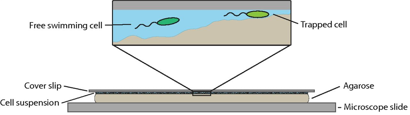
Fig. 1: The experimental setup. The bacteria swimming in a small microstructured environment created by the uneven gel surface. The bacteria rotates its helical propeller counterclockwise transitioning from a free swimming cell to a trapped cell as the bumpy surface come closer to the above thin glass slide. Figure adapted from Kuhn et. al.

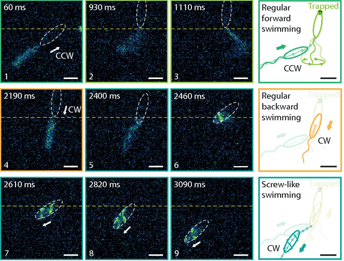
To recreate a bacterium’s natural environment, Kuhn and colleagues cover an uneven gel surface by a thin film of liquid with a thin glass slide above, as shown in Figure 1. The varying distance between the bumpy gel surface and the thin glass slide provided a micro-structured environment in which the bacteria could be observed. Their study focuses on a genetically modified soil bacterium that has a single flagellum placed at the end of a pill-shaped body a couple of micrometres in length. By watching the rotation and position of the fluorescently stained 20-nanometre-thick flagellar filament, they are able to determine when the bacterium is stuck and how structural changes enable its escape.

F2.largesoftbites
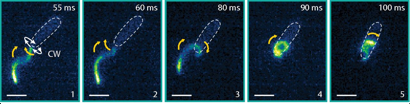
Fig 2: Approach, trapping and escape. Top row: the bacterium becomes trapped during regular forward swimming. Middle row: backwards swimming is not able to free the cell. Bottom row: the flagellar filament wraps around the cell body and the bacterium is able to reverse to escape the trap. Figure adapted from Kuhn et. al.

Compared to the free-swimming cell in a bulk solution, swimming close to surfaces increases the drag on the bacterium. The cell is trapped when the surfaces are close enough to increase the drag on the cell head above the thrust. To attempt to free themselves, the bacterium switches between clockwise and counterclockwise flagellar rotation – a forward-reverse strategy. This is unsuccessful. A successful escape only occurs when the flagellar filament wraps itself around the cell body, creating a conformation that has not been seen before. The wrapped filament is still helical, so rotation of the motor still creates propulsive forces along the helix axis. The cell then swims in a screw-like motion to release itself, as seen in Figure 2. It is yet unclear why exactly the coiled state enables the bacterium to escape. It could be the change in helical structure, the proximity of the flagellar filament to the cell body or the interaction of the flagellar filament with the nearby surface or even a combination of these fluid drag effects. Once the cell is free, the filament returns to its non-coiled state and normal swimming resumes. But how does this stiff inactive filament change its shape so drastically?

F5.largesoftbites
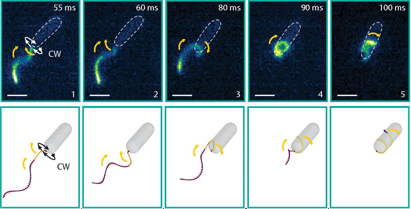
Fig 3: Flagellar filament transformation. The flagellar filament changes shape sequentially from the base of the helix to the top. The top row shows the experimental images with scale bar 1µm, and the bottom row shows computer simulations with the two different colours of the flagellar filament relating to the two different atomic configurations observed. Figure adapted from Kuhn et. al.

To induce the new swimming state in a bulk fluid environment, the researchers study the bacterium freely swimming in solutions of increasing viscosity. The increased viscosity increases the force on the flagellum and was observed to increase the likelihood of the screw-like motion. The increased forces on the flagellar filament thus seem to be responsible for the drastic change in state. Changes in the helical structure are well known for other flagellated bacteria changing the diameter and even the handedness of the helix, but never as extreme as to wrap the flagellum around the cell. These well-known flagellum changes are due to a change in the atomic structure of the flagellum, so rather than bend elastically, the filament changes shape sequentially along the flagellar filament. As the researchers’ bacterium’s filament is constructed similarly, they ascribe their two swimming types to two atomic configurations available to the flagellum: one normal and one coiled, as shown in Figure 3. Although the coiled swimmer is much slower than the uncoiled swimmer when freely swimming, the coiled state is able to free the bacterium from micro-structured traps, giving the bacterium a significant advantage.

Understanding this new type [1] of bacterial motion is critical to know how a bacterium survives in its natural habitat. For which habitats is the screw motion most common? Are there many more species that can coil to recoil? Where does this screw motion fail? What are the key features of the wrapped state that allow the bacterium to escape? Not only will studying these features help to understand populations of bacteria, for example how they spread and find better habitats, but it could also help in the design of micro-robots within complex environments such as for targeted drug delivery in the body.


[1] The same wrapped swimming configuration has also very recently been observed for a multi-flagellated bacterium, P. putida [you can see the paper here]. This bacterium has 5-7 flagella positioned at one end of the cell. Contrary to the results described above, the transition was observed for cells swimming in a bulk fluid environment. In the coiled state, all 5-7 flagella wrap around the cell. Through modelling the different swimming states of the cell, Hintsche and colleagues show an increased diffusion of populations that are able to transition to a coiled state.

Self-assembling silk lasers

Rings, spheres, and optical resonators self-assembled out of silk

Original paper: 3D coffee stains


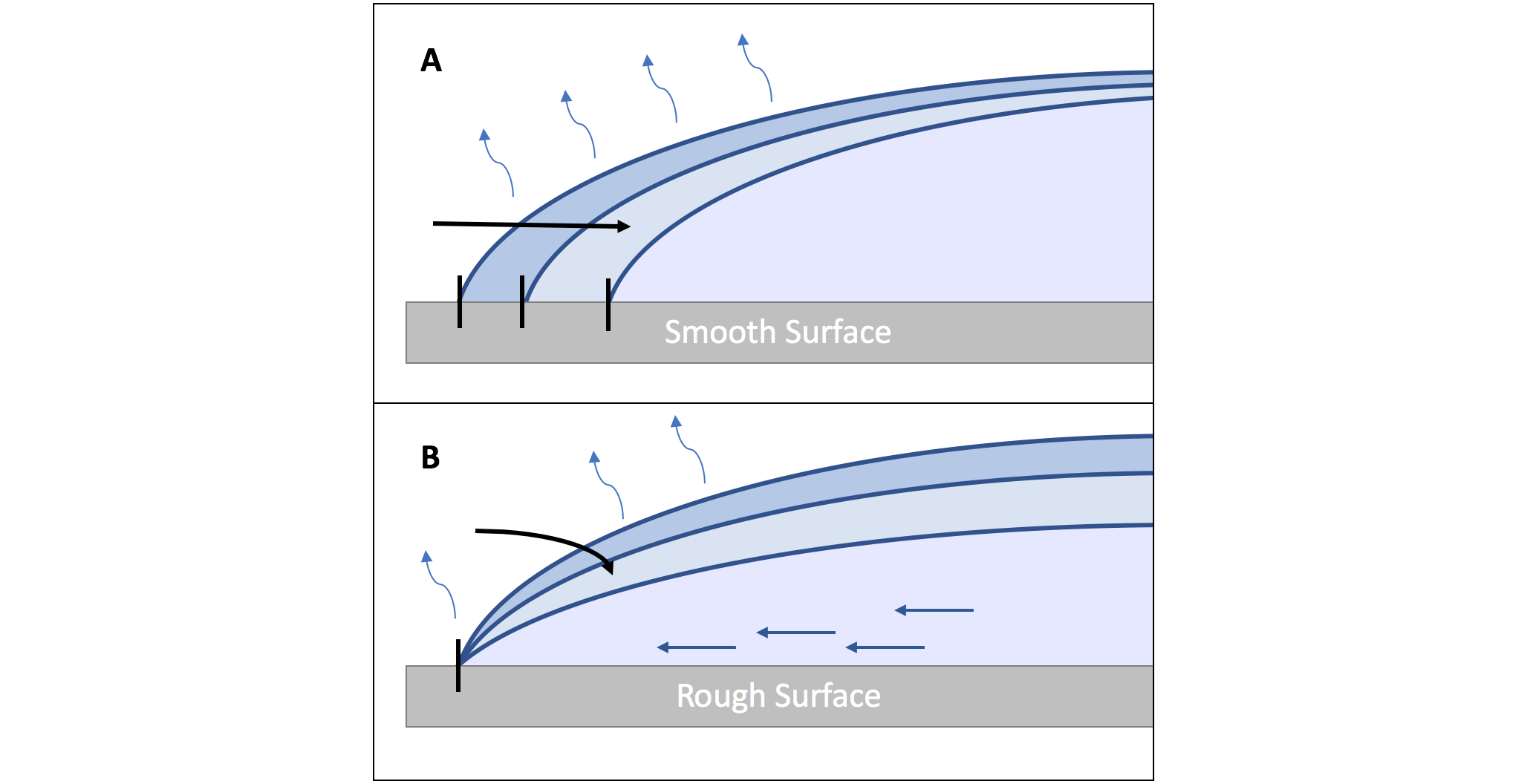
When I first learned about the coffee ring effect I thought it was super cool, but it seemed like an open-and-shut case. Why do rings form where some liquids, like spilled coffee, are left to dry? Roughness on the table causes the liquid to spread imperfectly across the surface, pinning the edges of the droplet in place with a fixed diameter. Because the diameter of the droplet can’t change during evaporation, new liquid must flow from the droplet’s center to the edges. This flow also pushes dissolved coffee particles to the edges of the droplet, where they are left behind to form a ring as the water evaporates away (Figure 1). More details can be found in our previous post, here. It’s a complicated phenomenon, but after being described in 1997 it doesn’t seem like anything new would be going on here. Right? Well, as usually happens in science, classic concepts have a way of popping back up in unexpected ways. Last year It?r Bak?? Do?ru and her colleagues in Prof. Nizamo?lu’s group at Koç University, Turkey published a study using the often troublesome coffee ring effect to their advantage: making self-assembling silk lasers.

pinning
Figure 1: Pinning and the Coffee Ring Effect. A cross section of a water droplet drying on a smooth surface (A) versus a rough surface (B). On a smooth surface the droplet shrinks due to evaporation. On a rough surface the edge of the droplet is pinned and cannot shrink, forcing an internal flow to maintain the droplet’s shape.

The fundamentals here are the same as the classic coffee ring effect, but instead of coffee particles Do?ru’s droplets hold a colloidal suspension of silk fibroin proteins. In a colloidal suspension, particles (such as proteins) are mixed in another material (such as water) and neither dissolve fully into solution nor precipitate out. Smoke, milk, and jelly are all examples of colloids. Harnessing the coffee ring effect to build 2D structures out of colloidal particles has been well developed since Witten’s description of the coffee ring effect in 1997 [1], but 3D self-assembly is much less common. What makes Do?ru’s 3D structures possible is the fibroin protein.

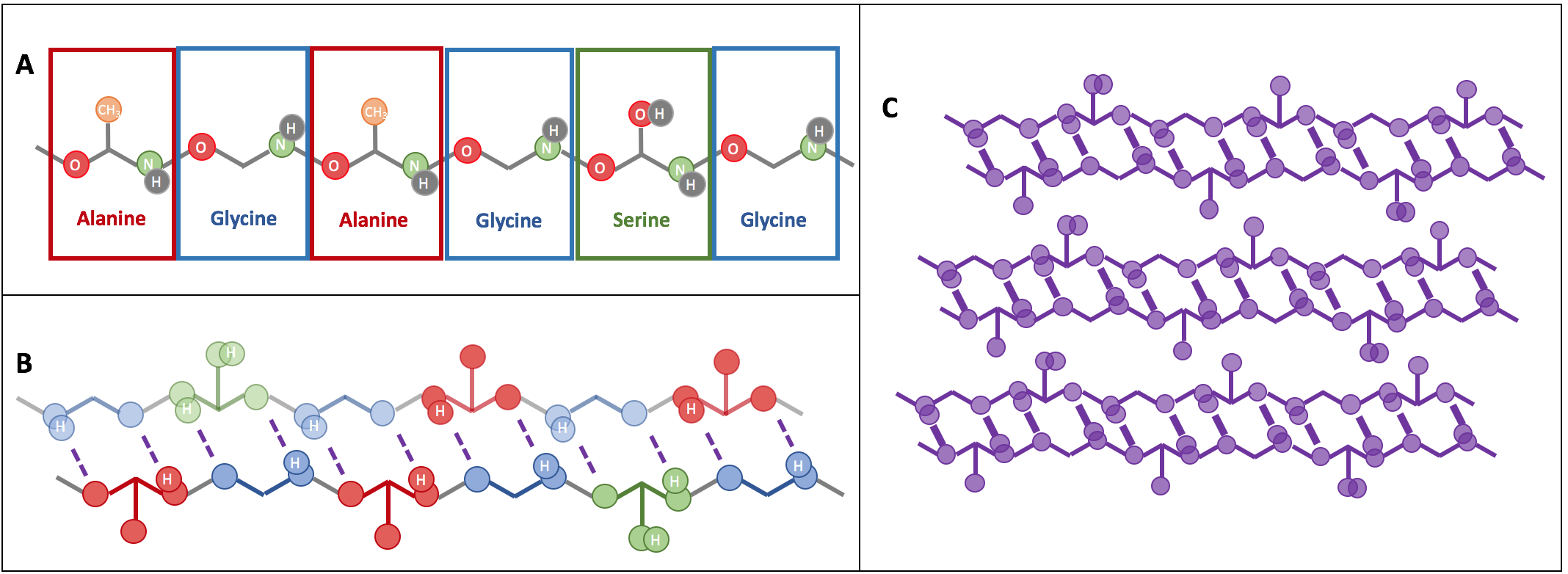
Fibroin is the primary component of silk from the silkworm Bombyx mori. These fibers have been used by humans for thousands of years to make textiles, but recently the fibroin protein has taken on new life when extracted from silk as an aqueous, water-based, suspension and regenerated into other forms [2,3]. Fibroin proteins are long, and they easily tangle up and bond to each other to form networks of layered crystalline structures called beta-sheets (?-sheets) (Figure 2). These sheets give silk fibers and other fibroin materials strength and toughness. Furthermore, fibroin materials are biocompatible and biodegradable.

Silk Fibroin and Beta Sheets
Figure 2: Silk Fibroin And ?-sheets. Silk is made of long fibroin proteins (a) that have a repeating molecular structure. These proteins bond together into ?-sheets (b), which then stack together (c) to form materials with high strength and toughness.

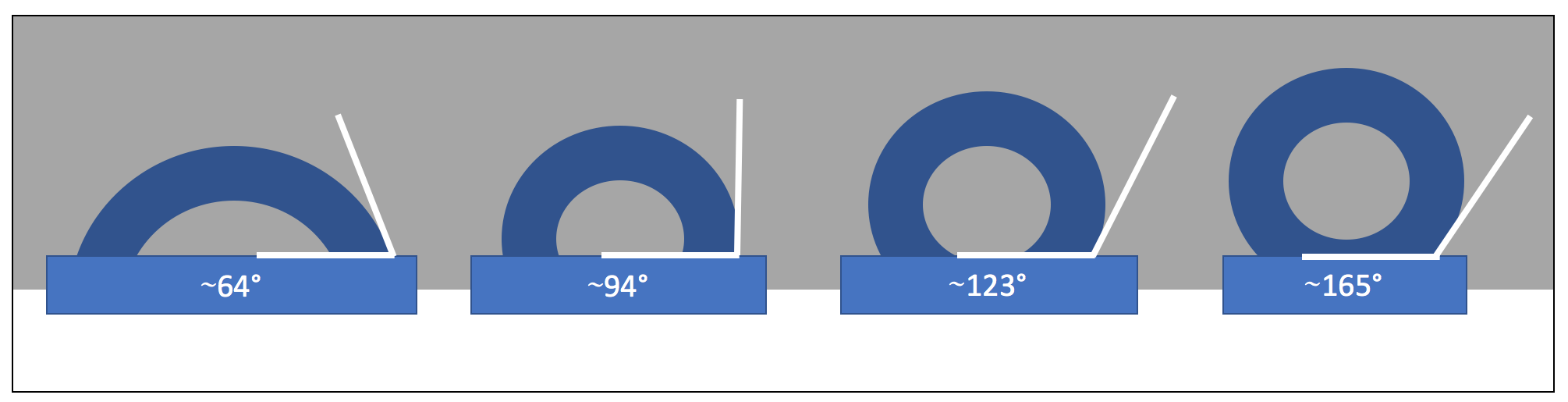
To create 3D structures with the coffee ring effect, Do?ru, Nizamo?lu, and their coworkers put droplets of silk solution on superhydrophobic surfaces. Superhydrophobic surfaces strongly repel water, preventing water-based liquids from spreading flat across the surface and making the droplets stand straight up during the drying process. This makes the angle between the edge of the droplet and the surface (called the contact angle) particularly high, between 95-145 degrees throughout evaporation. The interaction between water and the superhydrophobic surface determines the shape of the final structure, with high contact angles creating more spherical droplets (Figure 3). After a solid 2D ring of fibroin forms on the bottom, the silk proteins continue to stack along the droplet’s surface, forming a stable spherical shell of ?-sheets that the remaining water can evaporate through. The researchers found that the concentration of the fibroin solution was important for controlling the final structure. If the solution is too dilute then the shell will collapse in on itself, but if the fibroin concentration is too high the initial contact angle will be lower and the final structure will also be more 2D than 3D.

Contact Angle
Figure 3: Contact Angle. Droplets of the same solution show different contact angles on different surfaces (as adapted from Do?ru’s paper). On the left is a mildly hydrophobic surface, and on the right is a superhydrophobic surface. Note how the size of the contact angle (shown in white) increases with the hydrophobicity of the surface.

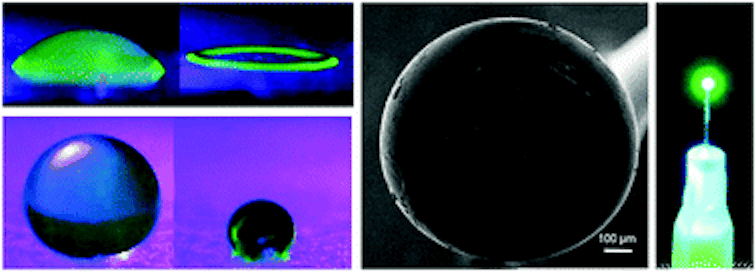
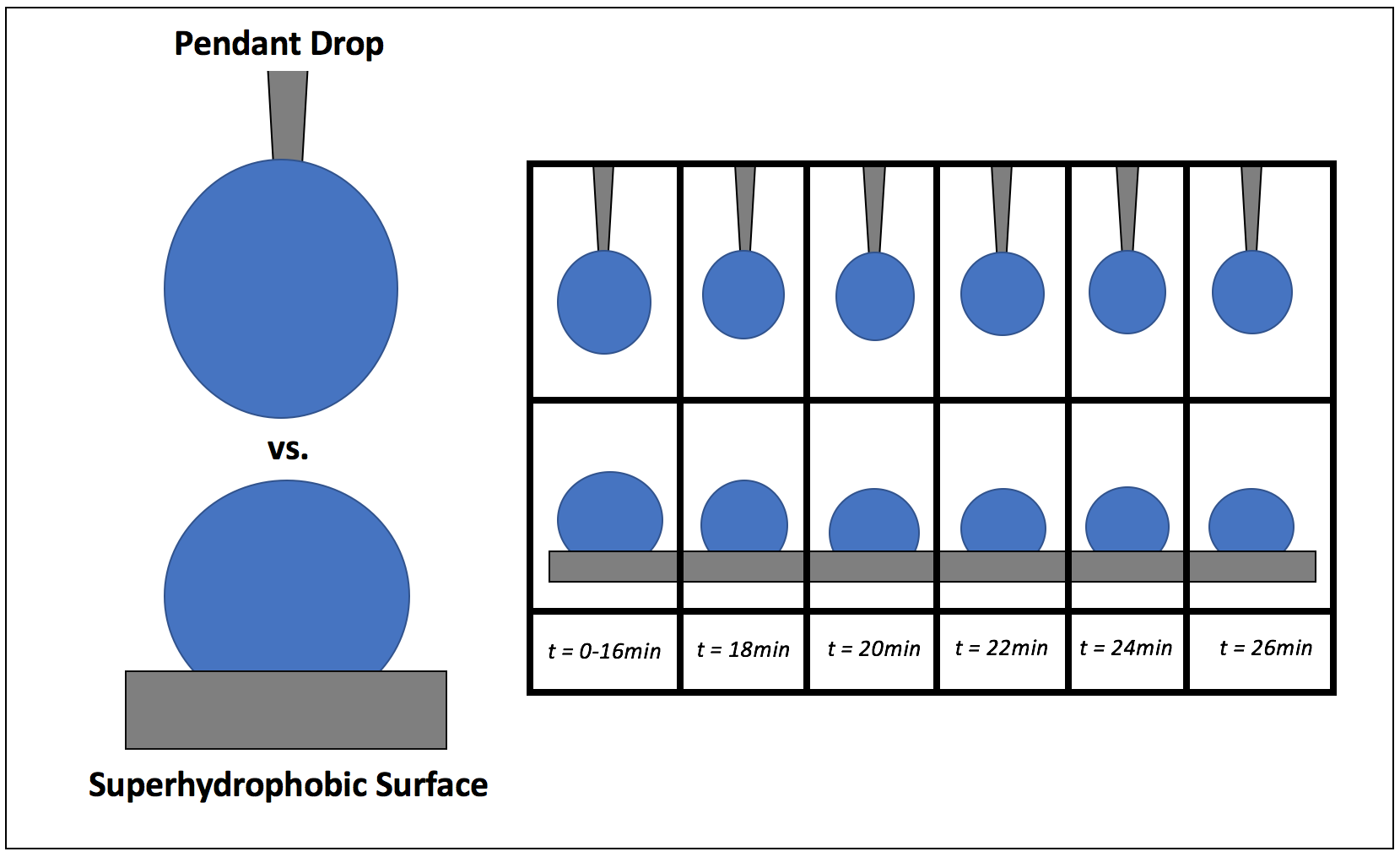
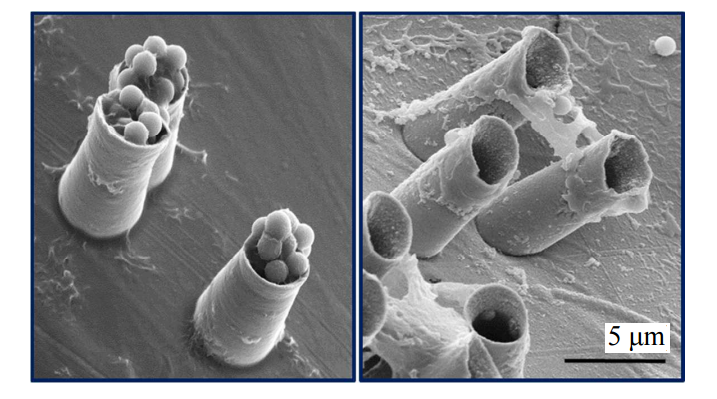
To make 3D spheres, the researchers tried the pendant drop method, hanging a droplet from the tip of a needle. Similar to getting high contact angles from a droplet on a hydrophobic surface, hanging a droplet from a needle gives that droplet a small contact area, and a spherical shape (Figure 4). If the diameter of the needle is the same size or smaller than the contact area of the droplet on a superhydrophobic surface, then the shape of a droplet squeezed out of the needle should be as or more spherical than the droplets in the previous experiment. In this study, the pendant drop method ends up producing more uniform drying. These pendant-drop shells are smooth enough inside to act as optical resonators, surfaces that reflect light waves back on themselves so the waves amplify each other (the “a” in “laser,” which I always forget comes from the acronym for “light amplification by stimulated emission of radiation”).

As a proof of concept, the researchers made shells out of fibroin mixed with green fluorescent protein (GFP). Fibroin ?-sheet formation is so stable that it still happens when small amounts of other materials are present, so the optical resonator can form in the same way it did with a fibroin-only solution. In this case, because GFP has been added, when the structure is exposed to the right light source it will amplify green light emitted by the shell itself – an “all protein laser” in the making.

Benefits of the Hanging Pendant Drop
Figure 4: Benefits of the Hanging Pendant Drop. The hanging pendant drop method can produce similar spherical drops to a hydrophobic surface. It was shown that the pendant drop method produces more spherical final structures (adapted from Do?ru’s paper).

Part of what’s exciting about this publication is that the authors harness the coffee ring effect for a fun new type of small scale, self-directed 3D “printing.” They showed that the method works for other polymers as well, but I agree with their choice to highlight the silk protein fibroin. Not only is fibroin biocompatible, but it also has the potential to be more environmentally friendly to process than other polymers and is already produced in large quantities globally as part of the textile industry.


[1] Han, W. and Lin, Z. “Learning from ‘Coffee Rings’: Ordered Structures Enabled by Controlled Evaporative Self-Assembly.” Angew. Chem. Int. Ed. 51 (2012): 1534–1546.

[2] Altman, G.H. et al. “Silk-based biomaterials.” Biomaterials 24 (2003): 401–416.

[3] Koh, L.-D. et al. “Structures, mechanical properties and applications of silk fibroin materials.” Prog. Polym. Sci. 46 (2015): 86–110.

Microcannons firing Nanobullets

Original Paper: Acoustic Microcannons: Toward Advanced Microballistics


Sometimes I read papers that enhance my understanding of how the universe works, and sometimes I read papers about fundamental research leading to promising new technologies. Occasionally though, I read a paper that is just inherently cool. The paper by Fernando Soto, Aida Martin, and friends in ACS Nano, titled “Acoustic Microcannons: Toward Advanced Microballistics” is such a paper.

The grand scheme of this research is developing a tool that can selectively shoot drugs into cells at a microscopic level. This is hard because everything happens really slowly at the microscopic scale in a liquid, in ways that meter-sized beings who live in air would not necessarily expect. For example, it is impossible for small organisms to move through a fluid using a repetitive motion that looks the same in reverse. The way we move our feet back and forth to walk would not work for a tiny aquatic human, because the forward motion in the first phase of movement would be nullified by backwards motion in the second phase. This is why bacteria use things like rotating flagella to move*.

Digressions aside, if you tried to shoot a tiny bullet through a cell wall, it would quickly halt and diffuse away before even hitting the cell wall. Soto, Martin, and collaborators wanted to beat this. Perhaps inspired by the likely unrelated Rodrigo Ruiz Soto, a Costa Rican competitive pistol shooter in the 1968 Olympics, Soto sought to develop a cannon that would change the game in the microscopic world in the same way that gunpowder technology changed things in  the macroscopic world.

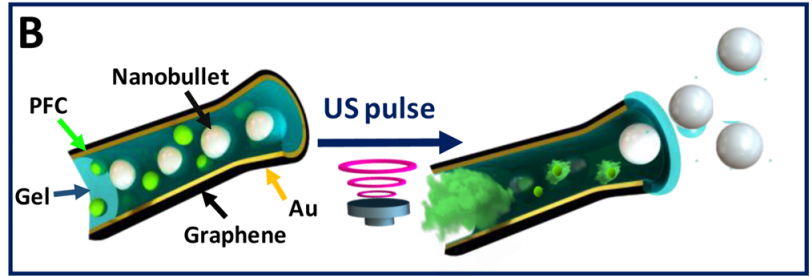
The researchers developed a “microcannon,” starting with a thin membrane of polycarbonate plastic studded with small pores, which is a thing you can buy and don’t have to make. The pores would eventually serve as the molds for the barrels of the cannons. They deposited graphene oxide onto the inside of the pores using electrochemistry, and then sputtered gold onto the inside of that graphene layer.  While they were still in the plastic membrane, the cannon pores were filled with a gel (literally gelatin from the supermarket) loaded with micron-sized plastic beads to act as bullets, and the “gunpowder,” which I’ll describe after the next image. The polycarbonate is then washed away with acid, leaving free-floating carbon and gold cannon barrels a few microns in size.

cannon
Figure 1: The microcannons, loaded with nanobullets before and after firing. Adapted from Soto and collaborators

While it is generally difficult to make small things move quickly in a fluid, bubbles are somewhat of an exception to this rule. Their collapse can lead to rapid motion on tiny scales. Taking advantage of this, the authors used perfluorocarbon (molecules with the same structure as hydrocarbons but with fluorine connected to carbon atoms instead of hydrogen) droplets as a propellant, which they turned into bubbles with an ultrasound-induced phase transition (essentially blasting them with soundwaves until they vaporized). When they initiated the collapse of the bubbles, they emitted a pressure wave which drove the nanobullets out of the barrel towards their target**.

cannon2
Figure 2: Composition and operation of the microcannons.

The authors performed two tests to characterize how powerful these things were. First, they embedded the cannons in an agar gel (an algae-based substance that Japanese desserts are made of) and loaded them with fluorescent beads. They looked at where the beads were before firing the ultrasound trigger at the cannon, and after. They observed that the beads had penetrated an average of 17 microns through the gel. However, this is about the thickness of a human cell layer, so this could be used, for example, to shoot a small amount of medication through the layer of cells on the wall of a blood vessel. In some more direct studies of the damage caused by collapsing bubbles (which is a common mechanism of damage to ship propellers), the jets that formed when bubbles collapse were shown with high-speed photography to penetrate about a millimeter into a gel. However, these bubbles were 1000 times bigger than those formed in the microcannons, and it’s not out of the question to assume that the penetration depth scales with bubble size.

jjrqrsy
Figure 3: High-speed photography of a millimeter-sized bubble collapsing near a gel wall and shooting a jet into the gel. The mechanism of nanobullet-firing and penetration is a smaller version of this. From Brujan, Emil-Alexandru, et al. “Dynamics of laser-induced cavitation bubbles near an elastic boundary.” Journal of Fluid Mechanics 433 (2001): 251-281.

The bullets were too fast to record with a microscope camera, so their second test involved recording the motion of the cannon after it fired the bullets. Naively, one would expect to be able to calculate the bullet speed with conservation of momentum from knowing the cannon’s speed, but momentum isn’t conserved in a noisy viscous environment (which brings us back to why it’s so hard for microorganisms to move around). They modeled the fluid dynamical forces acting on the system, measured that the terminal speed of the cannon was about 2 meters per second, and concluded that the initial speed of the bullets is 42 meters per second or 150 kilometers per hour (see appendix). Pretty fast, especially for something so small in a draggy environment.

After finding this paper I emailed the first author, Fernando Soto, saying that I enjoyed his paper, and he responded by saying that he was glad that other people liked his “very sci-fi nanodream.” I don’t know if this technology will succeed in the authors’ goal of localized drug delivery to cells, but I think it’s awesome that they made a functioning microscale cannon.

cannon3
Oh the humanity.

*I recommend reading Life at Low Reynolds Number if this interests you.

**Or just in whatever direction it was pointing, I guess.


Appendix: Velocity calculation

The researchers wanted to figure out how fast the bullets were moving based on their measurement of how fast the cannons were moving. Normally you could just use conservation of momentum, but because of the surrounding fluid, momentum is not necessarily conserved (unless you know the momentum of the fluid as well).

However, we understand how velocity decreases in a fluid based on drag: if the velocity is low, the drag force arises from separating the water molecules from each other, and the force is linear with velocity. If the velocity is high, the force arises mainly from accelerating the water to the speed of object, and the force is quadratic with velocity. To figure out which rule applies you can calculate what’s called the Reynold’s number, Re, which is the ratio of inertial to viscous forces in a fluid. If Re is in the thousands or higher,the flow is turbulent. f it’s below 100, the flow is smooth, or laminar. Specifically, the Reynold’s number is calculated as:

$latex Re=\frac{\rho L v}{\mu}$

where $latex \rho$ is the density of the fluid, L is the length of the object in the flow, v is its velocity, and $latex \mu$ is the viscosity. The microcannon was seen moving at about a micron per second, it was about 15 microns long, and the high speed photograph was done in water (density of 1 kg/L, viscosity of about 0.001 pascal seconds). This means the Reynold’s number was about 13, in the laminar regime, and that drag is due to viscosity and linear.

The equation of motion for a slowing object undergoing viscous drag with an initial velocity is

$latex v(t)=v(0)e^{-kt/m}$

where m is the mass of the cannon (known from stoichiometry) and k is the drag coefficient which depends on the viscosity as well as the geometry of the object experiencing drag. Because they know v(t) (as determined from high speed videography), t (the time since detonation), k, and m, they can find v(0).

Then it is assumed that momentum is conserved during the detonation, so the nanobullets with known mass can have their velocity calculated from

$latex v_{c}m{c}=v_{b}m_{b}$

where the indices c and b refer to cannon and bullet. The velocity was calculated to be 42 m/s. Pretty fast.


Dividing Liquid Droplets as Protocells

Original paper: Growth and division of active droplets provides a model for protocells


In the beginning there was… what, exactly? Uncovering the origins of life is a notoriously difficult problem. When a researcher looks at a cell today, they see the highly-polished end product of millennia of evolution-driven engineering. While living cells are not made of any element that can’t be found somewhere else on earth, they don’t behave like any other matter that we know of. One major difference is that cells are constantly operating away from equilibrium. To understand equilibrium, consider a glass of ice water. When you put the glass in a warm room, the glass exchanges energy with the room until the ice melts and the entire glass of water warms to the temperature of the room around it. At this point, the water is said to have reached equilibrium with its environment. Despite mostly being made out of water, cells never equilibrate with their environment. Instead, they constantly consume energy to carry out the cyclic processes that keep them alive. As the saying goes, equilibrium is death[1]: the cessation of energy consumption can be thought of as a definition of death. The mystery of how non-equilibrium living matter spontaneously arose from all the equilibrated non-living stuff around it has perplexed scientists and philosophers for the better part of human history[2].

An important job for any early cell is to spatially separate its inner workings from its environment. This allows the specific reactions needed for life, such as replication, to happen reliably. Today, cells have a complicated cell membrane to separate themselves from their environment and regulate what comes in and what goes out. One theory proposes that, rather than waiting for that machinery to create itself, droplets within a “primordial soup” of chemicals found on the early Earth served as the first vessels for the formation of the building blocks of life. This idea was proposed independently by the Soviet biochemist Alexander Oparin in 1924 and the British scientist J.B.S. Haldane in 1929[3]. Oparin argued that droplets were a simple way for early cells to separate themselves from the surrounding environment, preempting the need for the membrane to form first.

In today’s paper, David Zwicker, Rabea Seyboldt, and their colleagues construct a relatively simple theoretical model for how droplets can behave in remarkably life-like ways. The authors consider a four-component fluid with components A, B, C, and C’, as shown in Figure 1. Fluids A and B comprise most of the system, but phase separate from each other such that a droplet composed of mostly fluid B exists in a bath of mostly fluid A. This kind of system, like oil droplets in water, is called an emulsion. Usually, an emulsion droplet lives a very boring life. It either grows until all of the droplet material is used up, or evaporates altogether. However, by introducing chemical reactions between these fluids, the authors are able to give the emulsion droplets in their model unique and exciting properties.


modelSchematic_fig1b
Fig. 1: Model schematic. A droplet composed mostly of fluid B (green) within a bath of fluid A (blue). Inside the droplet, B degrades into A. Outside the droplet, fluids C and A react to form fluids B and C’. Adapted from Zwicker and colleagues.


The chemical reactions in the model are fairly simple (see figure 1). Fluid B spontaneously degrades into fluid A and diffuses out of the droplet. While fluid A cannot easily turn back into fluid B (since spontaneous degradation implies going from a high energy state to a low one), fluid C can react with A to create fluids B and C’, and this fluid B can diffuse back into the B droplet.

$latex B \to A \quad \text{and} \quad A+C \to B+C’$

If C and C’ are constantly resupplied and removed, respectively, they can be kept at fixed concentrations. Without C and C’, the entire droplet would disappear by degrading into fluid A, reaching equilibrium. Here, C and C’ act as fuel that constantly drives the system away from equilibrium, creating what the authors dub an “active” emulsion. Active matter systems like this one have had success in describing living things because they, like all living matter, fulfill the requirement of being out-of-equilibrium.

Because the equations that describe how fluids A and B flow over time are so complicated, the authors solve their model using a computer simulation. When they do, something remarkable happens. Emulsions with no chemical reactions with their surrounding fluids never stop growing as long as there is more of the same material nearby to gobble up. This process is called Ostwald ripening[4]. The authors find that an active emulsion system, due to the fact that material is constantly turning over, suppresses Ostwald ripening and allows the emulsion droplet to maintain a steady size.

In addition to limited growth, the authors also find that the droplets undergo a shape instability that leads to spontaneous droplet division (see this movie). This occurs due to the constant fuel supply of C and C’. The chemical reaction A+C ? B+C’ creates a gradient in the concentration of fluids A and B outside the droplet. Just outside the droplet, there is a depletion of B and an abundance of A, while far away from the droplet, A and B reach an equilibrium concentration governed by the rate of their reactions with C and C’. The authors dub this excess concentration of B far away from the droplet the supersaturation. Where there exists a gradient in the concentration of a material, there exists a flow of that material, called a flux. This is the reason a puff of perfume in one corner of a room will eventually be evenly distributed around that room. The size of the droplet is dependent on the flux of fluid B into and out of the droplet.

Two quantities determine the evolution of the droplet. The first is the supersaturation that reaches a steady value once all fluxes stop changing in time, and the second is the rate at which the turnover reaction B?A occurs. For a given supersaturation and turnover rate, the authors can calculate how large the droplet will grow, and they find three distinct regimes. In one regime, the droplet dissolves and disappears as the turnover rate outpaces the flow of fluid B back into the droplet. Another has the droplet grow to a limited size and remain stable, since the turnover and supersaturation balance each other out and give a steady quantity of fluid B. The third and most interesting regime occurs if the droplet grows beyond a certain radius due to the influx of fluid B outpacing its efflux. Here, a spherical shape is unstable and any small perturbation will result in the elongation and eventual division of the droplet (Figure 2).


dropletStabilityDiagram_fig2b
Fig. 2: Stability diagram of droplets for normalized turnover rate $latex \nu_-/\nu_0$ vs supersaturation $latex \epsilon$. For a given value of $latex \epsilon$, the diagram shows regions where droplets dissolve and eventually disappear (white), grow to a steady size and remain stable (blue), and grow to a steady size and begin to divide (red). Adapted from Zwicker and colleagues.


And that’s it. If you have two materials that phase separate from each other, coupled to a constant fuel source to convert one into the other, controlled growth and division will naturally follow. While these droplets are more sophisticated than regular emulsion droplets, they are still a far cry from even the simplest microorganisms we see today. There is no genetic information being replicated and propagated, nor is there any internal structure to the droplets. Further, the droplets lack the membranes that modern cells use to distinguish themselves from their environments. An open question is whether a synthetic system exists that can test the model proposed by the authors. Nevertheless, these active emulsions provide a mechanism for how life’s complicated processes may have gotten started without modern cells’ complicated infrastructure.

Though many questions still remain, Zwicker and his colleagues have lent considerable credence to an important, simple, and feasible theory about the emergence of life: it all started with a single drop.


[1]: This isn’t exactly true. Some organisms undergo a process called anhydrobiosis, where they purposefully dehydrate and rehydrate themselves to stop and start their own metabolism. Also, some bacteria slow their metabolism to avoid accidentally ingesting antibiotics in a process called “bet-hedging”.

[2]: For example, ancient Greek natural philosophers such as Democritus and Aristotle believed in the theory of spontaneous generation, eventually disproven by Louis Pasteur in the 19th century.

[3]: Oparin, A. I. The Origin of Life. Moscow: Moscow Worker publisher, 1924 (in Russian), Haldane, J. B. S. The origin of life. Rationalist Annual 148, 3–10 (1929).

[4]: Ostwald ripening is a phenomenon observed in emulsions (such as oil droplets in water) and even crystals (such as ice) that describes how the inhomogeneities in the system change over time. In the case of emulsions, it describes how smaller droplets will dissolve in favor of growing larger droplets.